Smart underwater technologies quickly entered the marine and offshore industry to increase the safety of operations, to decrease downtime and to lower maintenance costs. Traditional diver-based underwater inspection and repair work is becoming increasingly complex and marine operators are evaluating the use of traditional methods against robotic inspection systems.
A question that is always being discussed in the maritime world is which is more effective for underwater marine projects, Air Diving Services (ADS) or ROV (Remotely Operated Vehicle) inspections. Both methods are crucial for subsea projects, but they depend on several factors, including the complexity of the project, the water conditions, the safety requirements, and the goals of the inspection.
Learn how marine operations come about in today’s world
Offshore platforms, shipyards and marine terminals, deep water ports and other facilities require underwater periodic inspection and repair for structural stability. Common uses in the water are:
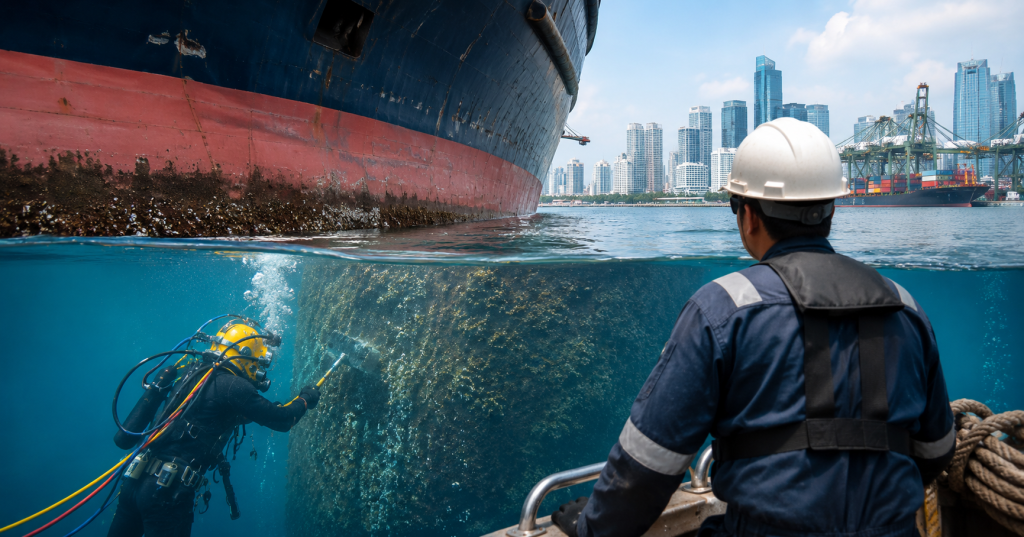
- Hull inspections
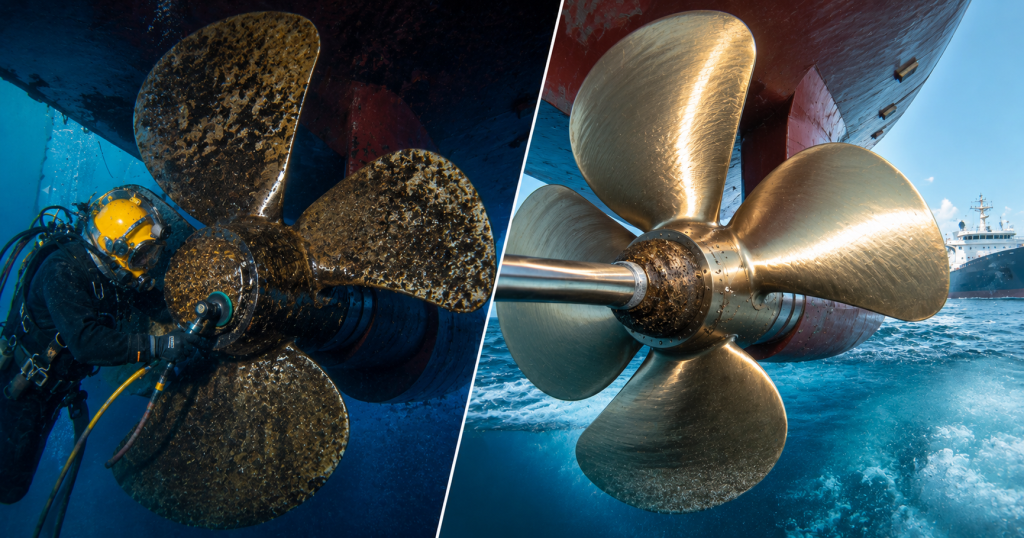
- Propeller cleaning
- Structural repairs
- Subsea welding
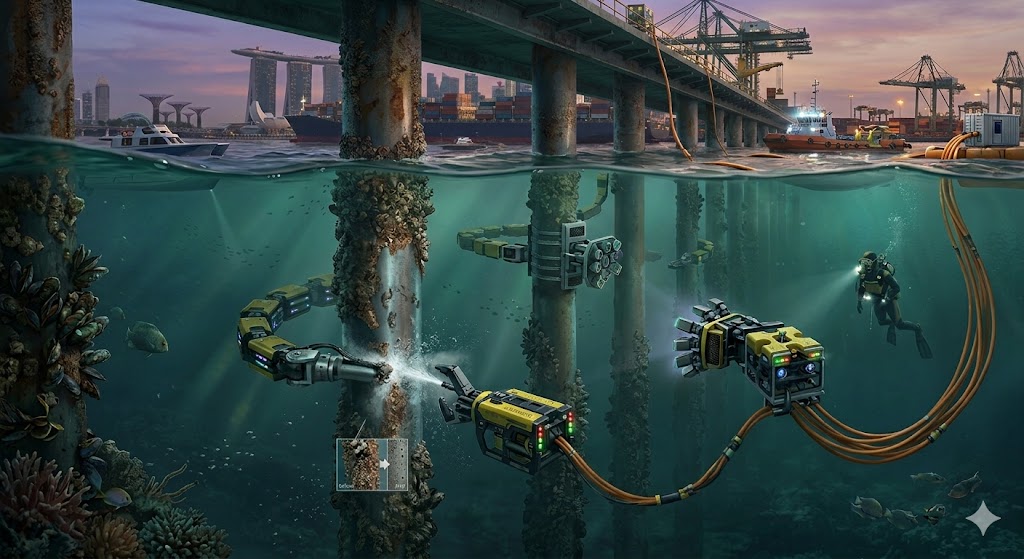
- Jetty inspections
- Pipeline surveys
- Corrosion monitoring
Commercial diving services in Singapore and the latest in ROV systems are the ideal way to do these jobs.
Why Professional Diving Operations For?
But traditional underwater diving is still vital for activities that demand physical interaction, technical repairs or hands-on inspection.
Typically, a knowledgeable crew of aquatics inspection divers performs:
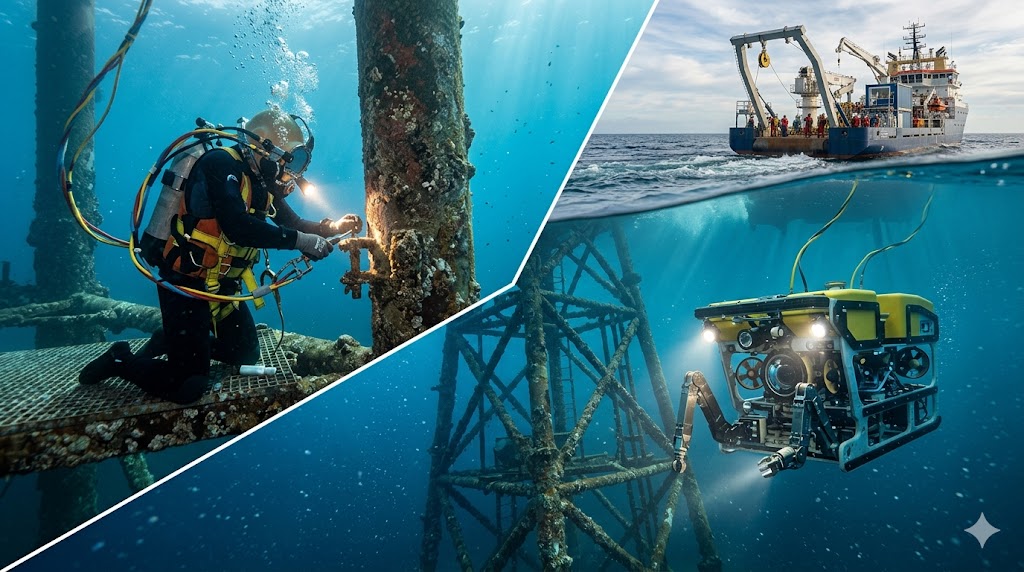
- The application of welding and cutting in water
- Marine growth removal
- Structural repairs
- Detailed tactile inspections
- Salvage operations
- Emergency underwater maintenance
Human underwater divers can make decisions while they are underwater, and they are able to perform precision tasks, which a robotic system might not be able to perform all the tasks in complex environments.
Why is ROV Inspection in vogue in ?
ROV (Remotely Operated Vehicle) technology has been commonly adopted in the offshore and deep water operation. These robot systems include cameras, sonar imaging, sensors and inspection tools.
The following can be done with ROVs:
- Deep-water inspections
- Hazardous environment surveys
- Pipeline monitoring
- High-resolution video recording
- Data collection & reporting
- Offshore asset monitoring
ROVs can be used to increase the efficiency for many operators, without the risk of dangerous situations for divers.
Key differences between Air Diving and ROV Inspection
What’s the difference between Air Diving and ROV Inspection?
Safety and risk management
In an underwater environment which is hazardous to humans or inaccessible, ROVs can help protect humans from exposure. If immediate repair actions or manual intervention is required, divers are still preferred, however.
In severe industrial projects, robotic inspection can be effective along with offshore diving assistance services for the highest threat situations.
2. Accuracy and Flexibility
ROV systems are an excellent means of imaging and recording data, particularly for large-scale surveys. But, given the fact that the conditions of the structure can be assessed through contact, divers have a great utility in complex repair works.
This is the one that is more advantageous in the case of the subsea inspection and maintenance project where visual data and physical assessment is required.
3. Cost and Operational Efficiency
ROVs can help to minimize downtime during routine inspections and long duration surveys. On smaller marine works, however, a smaller equipment set up may be advantageous for operations by divers.
Hybrid solutions – often preferred by modern marine operators include:
- ROV preliminary surveys
- Diver verification inspections
- Manual repair execution
The importance of Diver to Marine Industries
Despite all the advancement in technology, numerous jobs under water still require a skilled diver. Marine diving contractors are still essential for complex repairs, underwater access to make repairs, and emergency interventions.
Diver assistance still continues to play a vital role in:
- Ship repair projects
- Underwater structural reinforcement
- Propeller polishing
- Jetty maintenance
- Emergency subsea recovery
That’s why there’s still need for marine underwater maintenance teams around the world in ports and at offshore facilities.
This course covers the new technologies for underwater inspection
The marine industry is progressing toward an integrated inspection solution in, which integrates robotics, AI-driven reporting with diver expertise.
Trending innovations include:
- AI-assisted defect analysis
- Real-time underwater mapping
- Hybrid ROV-diver operations
- Predictive maintenance systems
- Digital inspection reporting
The advances are making the underwater industrial diving solution more efficient, and supporting marine operators to better and quicker maintenance decisions.
FAQs
The question is which works better underwater – divers or ROVs?
Both alternatives have their advantages. ROVs are wonderful for areas that are too deep or too dangerous for divers to do repairs on, and divers will have a much better opportunity to do physical inspections as well as make hands on repairs.
Does the ROV inspection method result in a safer inspection than the traditional diving method?
ROVs are highly beneficial in deep and offshore environments and play an important part at reducing risk exposure of humans in hazardous underwater environments.
What is the reason for the ongoing importance of commercial diving?
Robotic systems can only be used to automate some specific tasks, including welding, maintenance, repair and cutting, tasks that are performed by divers during emergency maintenance situations.
What types of industries are there that make use of underwater inspection services?
These are common applications of undersea inspection and maintenance solutions: shipping, offshore oil and gas, ports, marine construction, and ship repair.
Are ROVs all the professional marine diver will need?
No. While ROV technology is rapidly developing, there are many repair and maintenance tasks that cannot be accomplished by ROVs.
Conclusion
The underwater inspection, whether it’s diver-based or robotic, is essential for the marine projects today and is going to be increasingly important as underwater technology evolves. The ROV systems and experienced divers will offer a safer and more efficient method for inspection in difficult areas, while for repair and maintenance, ROV will offer precision and flexibility.
In the eyes of many marine operators, it is not about the choice of one technology over the other, but about combining both technologies to enhance safety, reduce downtime and ensure the long-term reliability of their assets.