Fuel loss in today’s shipping may come from seemingly trivial details that, nonetheless, accumulate over time. However, one of the least considered yet the most crucial maintenance measures is maintaining the optimum state of the propeller. With the passage of time, gradual degradation in efficiency will occur because of marine growths and corrosion.
However, propeller polishing is a must in regular maintenance, particularly for ships sailing in bustling areas such as Singapore.
Why propeller condition is more important than many ship owners think
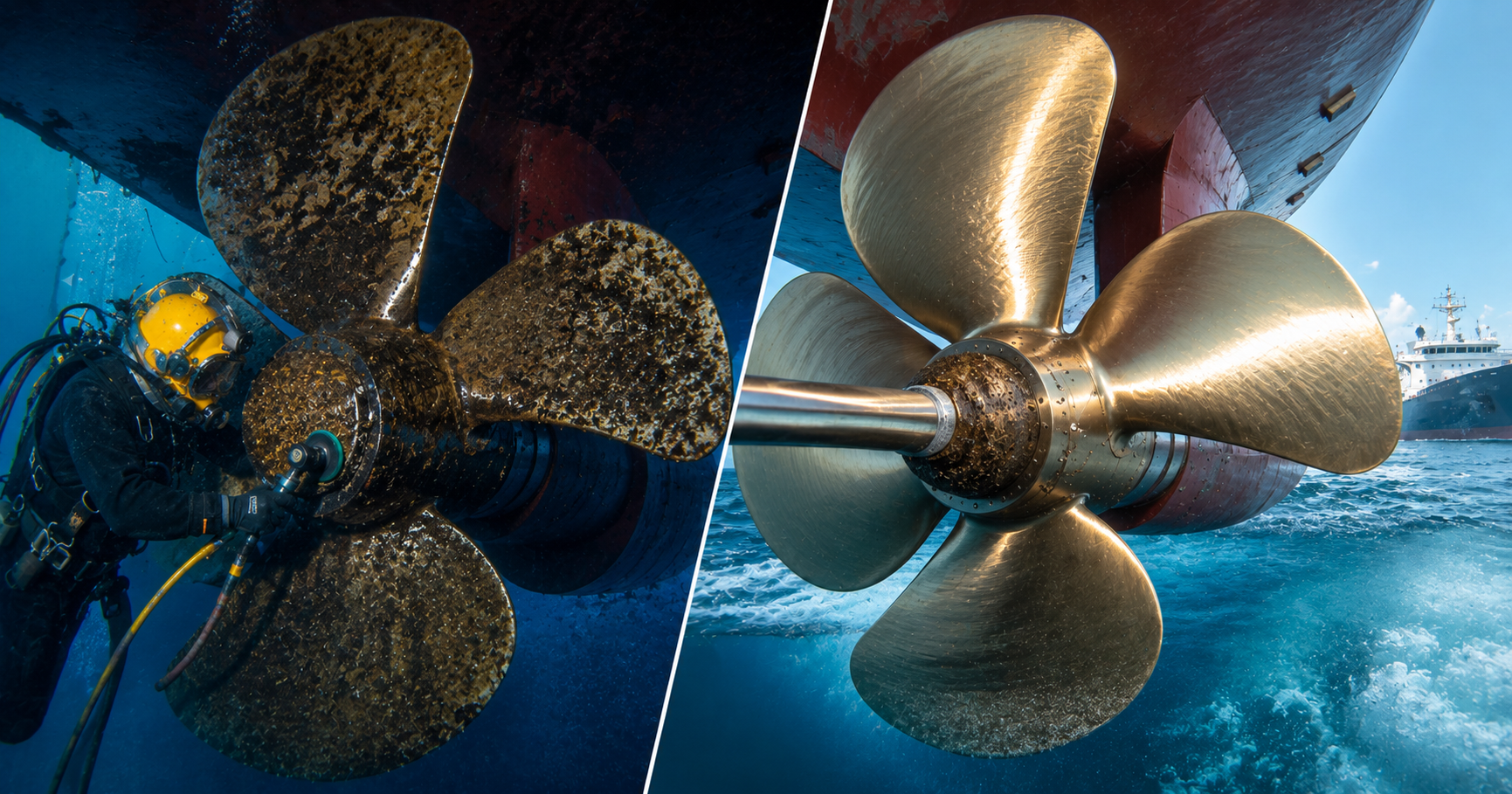
The main engine of any ship is nothing else but a propeller, and it works much better if there are no irregularities in its surface which cause the disruption of smooth water flow around the blades. This is what happens with any kind of fouling or corrosion of the blade.
And what results does it have? Directly influencing:
- Fuel usage rate
- Stability in speed
- Engine loading
- Effectiveness of navigation
Surface roughness creates turbulent water flow and thus reduces efficiency.
The importance of propeller polishing in relation to fuel economy
The most obvious advantage of propeller polishing is the increase in the hydrodynamic qualities. The smoothness of a surface makes water flow smoothly, thus preventing any unnecessary waste of energy.
Thus, this practice will result in:
- Decreased amount of fuel used during each journey
- Enhanced fuel efficiency
- Less stress for an engine when traveling long distances
- Maintained constant speed of travel
All these benefits add up, especially in case of fleet management.
Drag and cavitation: understanding ship propeller problems
There are two main problems associated with a poorly-maintained propeller – drag and cavitation.
Reduction of drag
An increased resistance that a rough surface creates leads to an enhanced work effort of an engine. Consequently, the amount of fuel that must be consumed by the vessel increases.
Prevention of cavitation
The presence of a non-smooth surface causes different pressures in a water flow, resulting in the formation of vapor bubbles. These bubbles can harm a propeller, affecting its work efficiency.
Polishing of a propeller surface can prevent all these problems from occurring.
What takes place in underwater propeller polishing?
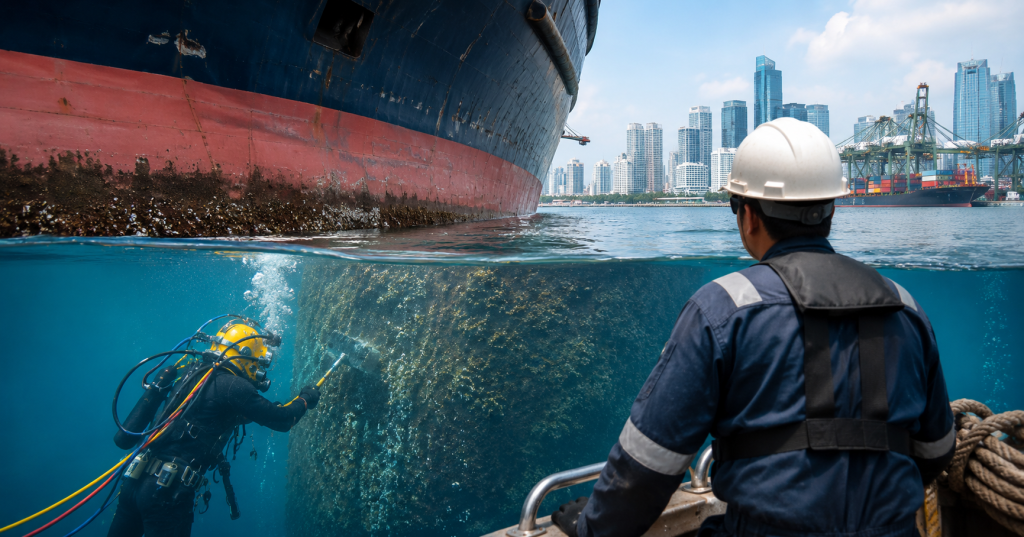
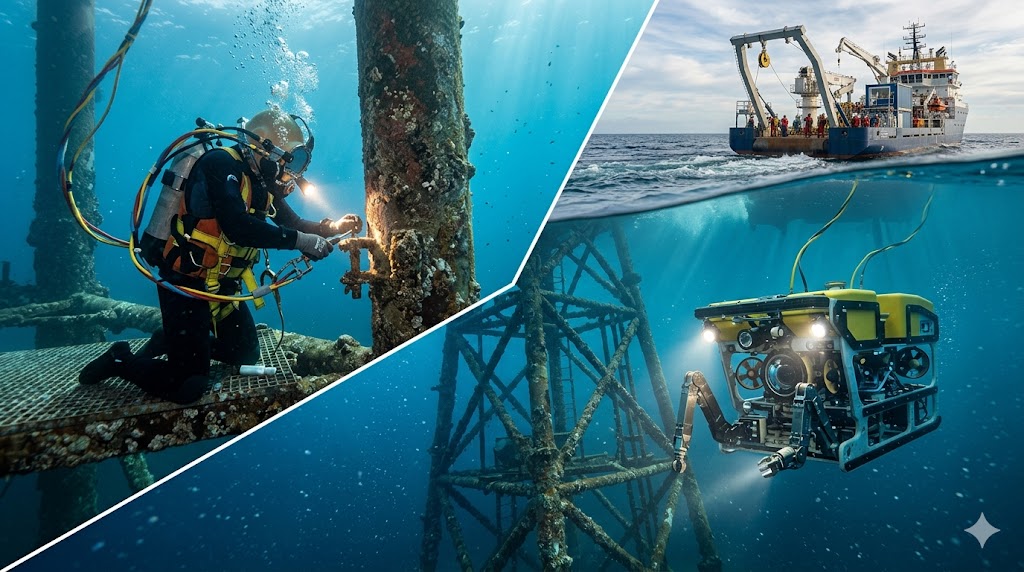
Underwater servicing services are specifically crafted to make the operation more efficient without causing much hassle. For most vessels, there is no need for dry dock.
This typically involves:
De-growth
Cleaning out the soft and hard marine growth from the propeller blades.
Restoration of surface
Smothing out any rough spots due to corrosion or wear.
Precision polishing
Polishing the surface of the blades to create ideal hydrodynamics.
Why it is beneficial for the vessel performance
As the name suggests, the state of the propeller plays an important role in determining the performance of the vessel on water. With proper care of the propeller, the overall performance of the ship improves.
It allows for:
- Faster response when accelerating
- Better maneuvering capabilities
- Less fuel usage
- Decreased vibration levels
And for commercial vessels, this means more savings.
Importance to the operations of commercial and offshore vessels
The time lost while performing maintenance on commercial vessels and offshore vessels can be very expensive. Therefore, underwater cleaning methods are the best option.
Through underwater cleaning techniques, one can ensure that the propellers on the ship are cleaned without the need to dock the vessel. It ensures efficiency and keeps the schedule running.
In places like Singapore, with high shipping traffic, this can prove very beneficial.
Advantages relating to the environment and compliance with regulations
Efficiency does not only pertain to saving time but is linked with regulatory standards as well.
Properly maintained propellers can help save fuel, which will assist in compliance with the rules and regulation of the International Maritime Organization for all vessels.
Some benefits include:
- Low carbon footprint
- Fuel efficiency
- Environmental sustainability
Importance of periodic polishing of propellers
A lot of operators usually wait for signs of inefficiency to start maintenance processes. But by then, there will likely be fuel losses incurred.
Periodic polishing within marine maintenance solutions helps to avoid:
- Loss of efficiency
- Inefficiencies in fuel usage
- Wear and tear of parts
- Unexpected expenses
Prevention will always be more cost-effective than repair.
Frequently Asked Questions (FAQs)
What is propeller polishing simply put?
It is the act of polishing the surface of a ship’s propeller to improve its efficiency.
What benefits will I get from polishing my propeller?
The efficiency of the propeller will improve because it will use less fuel.
How frequently should I polish my propeller?
That depends on your vessel. Many opt to have this process done when having the propellers examined underwater.
Can this process be done without taking the ship out of service?
Yes, it is possible to do it without dry docking since it can be performed while the ship is floating in the water.
Does it help with cavitation problems?
Yes, smoothing the propeller surface helps reduce cavitation by improving water flow consistency.
Conclusion
The state of the propellers is more critical to ship performance than what some operators realize. With time, tiny differences on the surface contribute to fuel inefficiency.
By carrying out regular polishing of propellers and proper maintenance underwater, one can achieve efficiency and minimize operating costs.
In today’s world where operators have a keen eye for reliability and minimizing fuel usage, propeller polishing is a critical exercise.