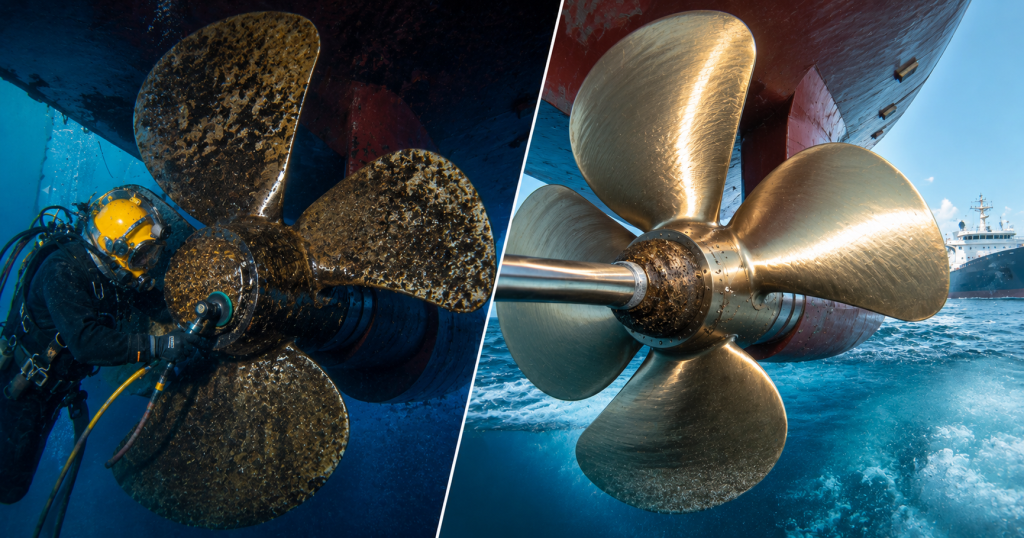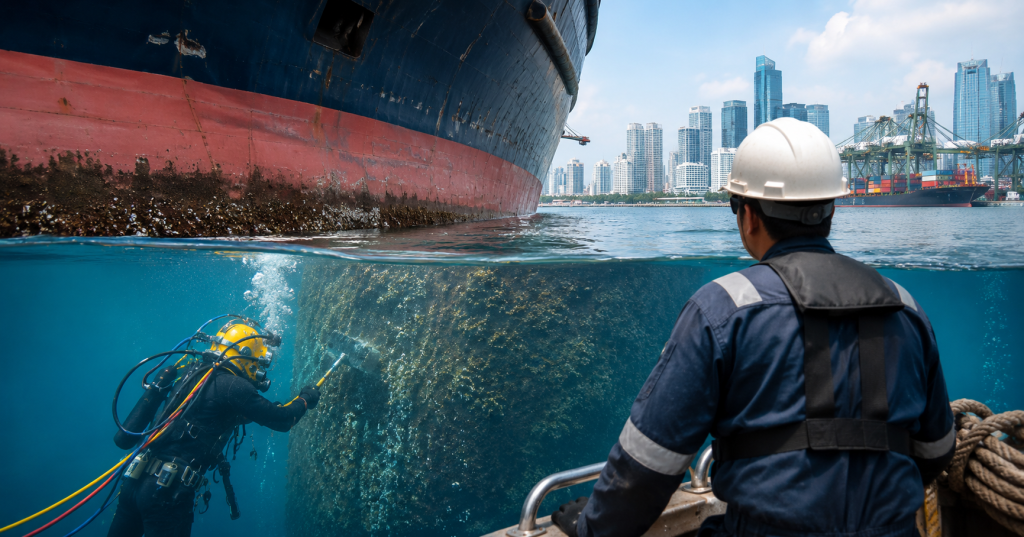
The seabed is seldom a static environment in the dynamic world of marine and offshore engineering. The deposition of silt and sediments, or industrial or natural debris, can rapidly transform a working port or offshore location into a risk zone. Although massive hopper dredgers can be used in large channels in the open ocean, they do not have the surgical ability needed where delicate pipelines, jetties, or platform legs are to be worked.
This is the gap that is filled by diver assisted dredging and debris removal. With the integration of the mental decision-making of a certified commercial diver, high-powered suction and lift technology, operators are able to execute surgery-like excavation. It is done to make sure that submerged assets are cleared of obstructions without the danger of collateral damage associated with heavy, uncontrollable machinery.
What is Diver Assisted Dredging?
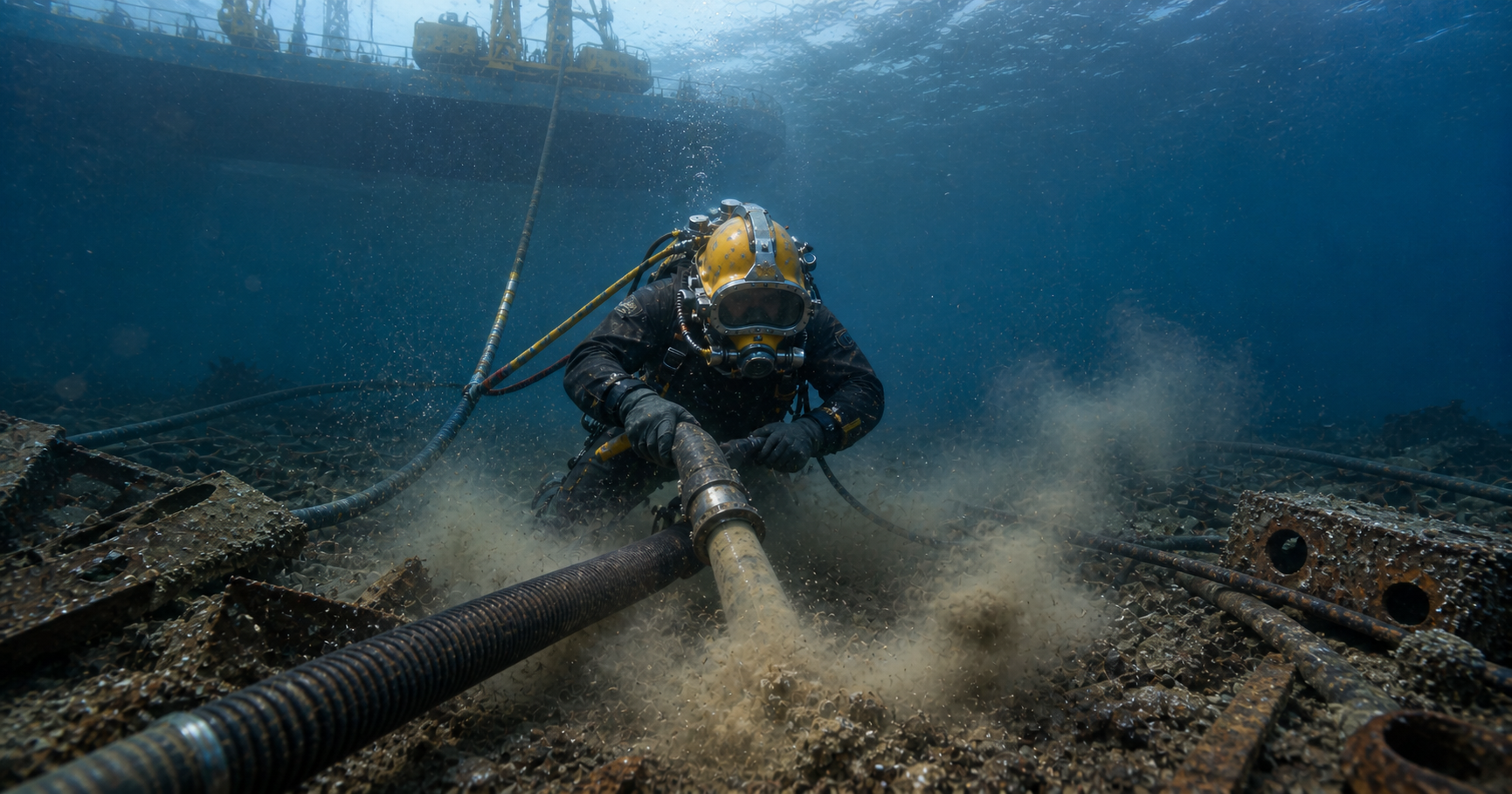
Diver assisted dredging is a specialised method of underwater excavation, in which a diver uses the suction end of a dredging system manually. The diver is able to work through geometries of the structure, into crannies under piers, or exactly clearing sediment around a vulnerable subsea manifold, unlike automated systems.
Underwater dredging services that require more precision over pure volume are best performed using this method. It could be surveying an area before installing a new pipeline or inspecting a buried pipeline, the diver will be the eyes and hands that are required to get the precision required when the stakes are high.
What is Underwater Debris Removal?
Whereas dredging is concerned with a loose material such as sand and silt, underwater debris removal is concerned with the solid obstructions. This can include:
- Industrial Waste: Abandoned tools, cables thrown away, or building materials.
- Natural Obstructions: Huge rocks, trees, or thick marine vegetation.
- Wreckage: The debris of previous buildings or parts of vessels that are a hazard to navigation.
Subsea debris removal services are necessary to keep work sites clean, and ROVs and divers can operate without the threat of entanglement or collision.
Methods Used in Diver Assisted Dredging
The method used is dependent on the depth of the water, the density of the material, and the lift height required:
1. Airlift Dredging
The deep-sea vacuum cleaners are called airlift systems. A density vacuum is formed by forcing compressed air into the base of a vertical pipe, which causes water and sediment to rise to the surface. Airlift dredging diver jobs are very efficient in any vertical lift, and they frequently serve to remove silting of deep-water jackets or bridge caissons.
2. Hydraulic Dredging
In this process, the centrifugal pumps are made with high capacity to generate suction. Underwater hydraulic dredging is most suited when the sand or mud is to be moved horizontally to great distances. It is also common in the maintenance of the ports where the sediment must be pumped off the dock and into a special site.
3. Manual Diver Excavation
In the most delicate operations, like the discovery of a finer fibre-optic cable, divers apply hand-held tools known as jetting to loosen compressed clay or sand, then sweep it away using a low-pressure suction line.
Equipment Used in Underwater Dredging
A set of special equipment is needed to perform an effective underwater excavation service:
- Airlift Pumps: Light and simple to operate.
- Hydraulic Suction Systems: These are driven by topside power packs and have huge flow rates.
- Underwater Cutting Tools: Hydraulic saws/torches are employed in offshore debris removal to cut down on big obstructions.
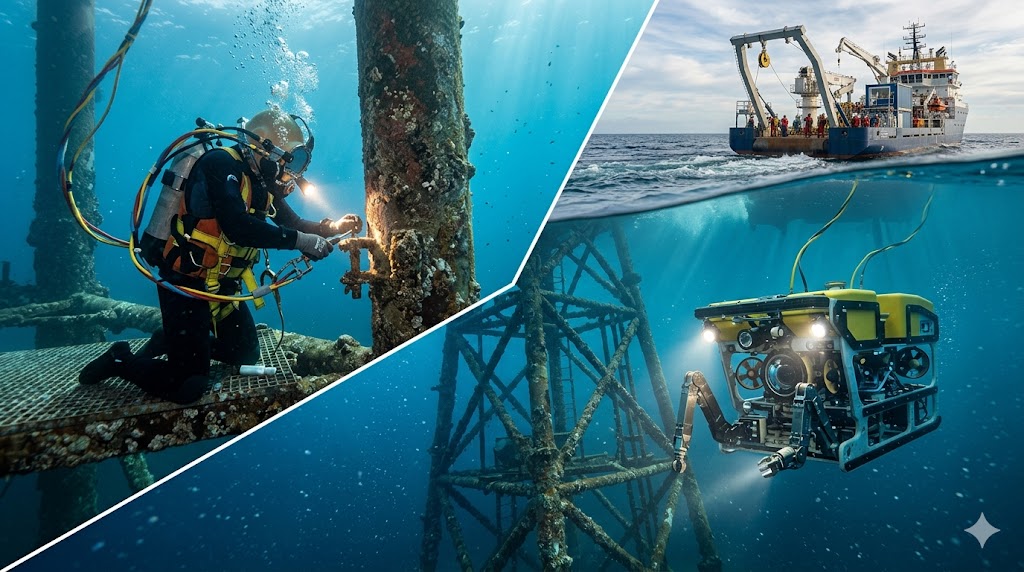
- ROV Dredging Support: The ROV can be used in deeper water to illuminate and observe the HD video as the diver concentrates on the suction nozzle.
Applications of Diver Assisted Dredging and Debris Removal
The service is a high conversion need in a number of marine industries:
- Port and Harbour Dredging: Removing dead areas beneath jetties and berths where conventional dredgers are unable to operate.
- Offshore Oil & Gas Projects: Discovery of underwater wellheads or clearing the route by dredging of the pipeline trench.
- Marine Construction: The levelling of a pad of stone or sand on which the concrete foundations are to be placed.
- Infrastructure Repair: Sediment removal to enable an inspection of bridge piles or dam walls.
Importance of Underwater Site Clearance
Underwater site clearance is obligatory before any new building or inspection can commence. A cluttered seabed is an overhead. Clearing debris ensures:
- Safe Navigation: The avoidance of hulls or thrusters of the vessels coming into contact with submerged objects.
- ROV Accessibility: It is the ability of the inspection robots to move freely without snarling the cables.
- Structural integrity: The heavy debris should not lie against (and possibly crush) pipelines or cables.
Benefits of Diver Assisted Dredging and Debris Removal
Professional underwater sediment removal has a risk reduction ROI:
- Better Operational Performance: Clean sites can be completed faster, and there will be fewer equipment snags.
- Improved Safety: Eliminating entanglement risks safeguards the lives of the dive crews and the safety of costly subsea equipment.
- Less Environmental Impact: Precision dredging induces less turbidity (cloudiness) as compared to large mechanical buckets, which preserve coral or fish habitats.
- Economical Maintenance: Smaller, localized dive crews tend to be more economical to assemble than huge dredging ships for local cleaning.
Challenges in Underwater Dredging
It is a fight with physics in the case of working underwater. Underwater dredging problems are:
- Visibility: The natural excavation of sediment produces conditions of black water. Divers have to work a lot by feeling or by means of sophisticated acoustic imaging.
- Powerful Currents: May blow the suction hose out of the work area or may cause the sediment to settle back in the hole as fast as it is blown out.
- Underwater Hazards: Snag hazards or concealed unexploded ordnance (UXO) in old harbour locations.
How to Choose the Right Dredging Service Provider
It takes more than a pump to make a successful project successful; it needs an experienced underwater contractor. Consider:
- Safety Standards: Does the company follow IMCA or ADAS guidelines for commercial diving?
- Equipment Versatility: Are they available in airlift and hydraulic to suit all soil types?
- Project Portfolio: Have they been able to clear sites in high-current or low-visibility environments?
Choose a reliable underwater contractor for efficient dredging and debris removal services.
Cost of Diver Assisted Dredging and Debris Removal
The cost of the dredging services is usually determined using the Day Rates of the dive spread and the amount of material to be relocated.
Pro Tip: The hourly rate of a dive team is an element, but the ultimate cost-saving measure is efficiency. A well-equipped crew, such as one with proper airlift diameter to the type of sediment, will have half the amount of time taken by a less experienced crew.
Environmental Considerations in Dredging
The services of environmental dredging are more under scrutiny than ever. Modern contractors use:
- Silt Curtains: To avoid the occurrence of sediment plumes in the restricted zones.
- Biodegradable Oils: In any hydraulic tools underwater to avoid contamination.
- Accurate Disposal: Making sure that dredged material is transported to designated “spoil grounds” and not simply deposited in the area.
Future Trends in Underwater Dredging
The industry is shifting towards a model of a hybrid:
- Developed Dredging Technology: VR headsets put the divers into virtual reality, allowing them to peer through the silt with the help of 3-dimensional sonar overlays.
- Electric Suction Systems: Less noise and carbon footprint of topside diesel power packs.
- Autonomous Support: AUVs can be used to map the seabed prior to and following dredging in order to determine the precise amount of sediment that has been removed.
Conclusion: Efficient Marine Maintenance with Expert Dredging
The surgical instruments of the marine world are diver assisted dredging and debris removal. These services preserve the integrity of the structures of underwater resources by prioritizing accuracy over forcefulness and by guaranteeing a clear, risk-free route to marine activities. Be it the upkeep of a bustling port or the setting up of an offshore oil platform, skilled dredging is the key to underwater success.
Get in touch with us today so that we can provide you with professional dredging and debris removal services.
Frequently Asked Questions (FAQ)
Q1. Divers, how far can they do dredging?
Ans: Air-based systems (airlifts) are effective in a range of 10m to 50m. To go more in-depth, systems driven by hydraulic pumps or systems operated by ROV are usually applied.
Q2. Will the airlift be able to remove large rocks?
Ans: The size of airlifts is constrained by the pipe diameter. A suction hose will not be used by a diver; in any case involving large rocks or heavy debris, a diver will employ a mechanical grab or a lifting bag.
Q3.Will the airlift be able to remove large rocks?
Ans: The size of airlifts is constrained by the pipe diameter. A suction hose will not be used by a diver; in any case involving large rocks or heavy debris, a diver will employ a mechanical grab or a lifting bag.
Q4. What is the speed of the removal of sediment?
Ans: This is dependent on the material. Loose sand travels very fast, whereas compacted clay (stiff) needs to be jetted to loosen it, and this takes longer.