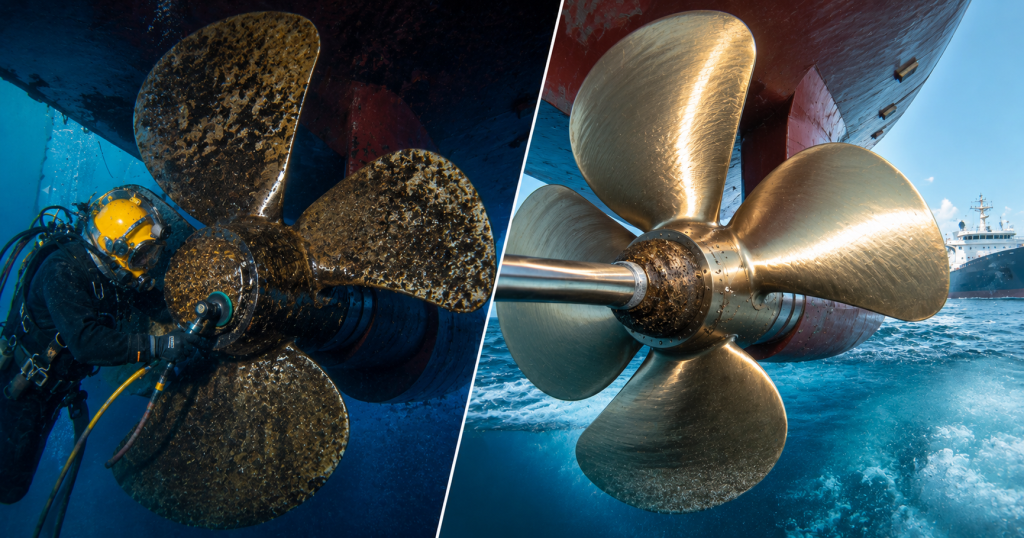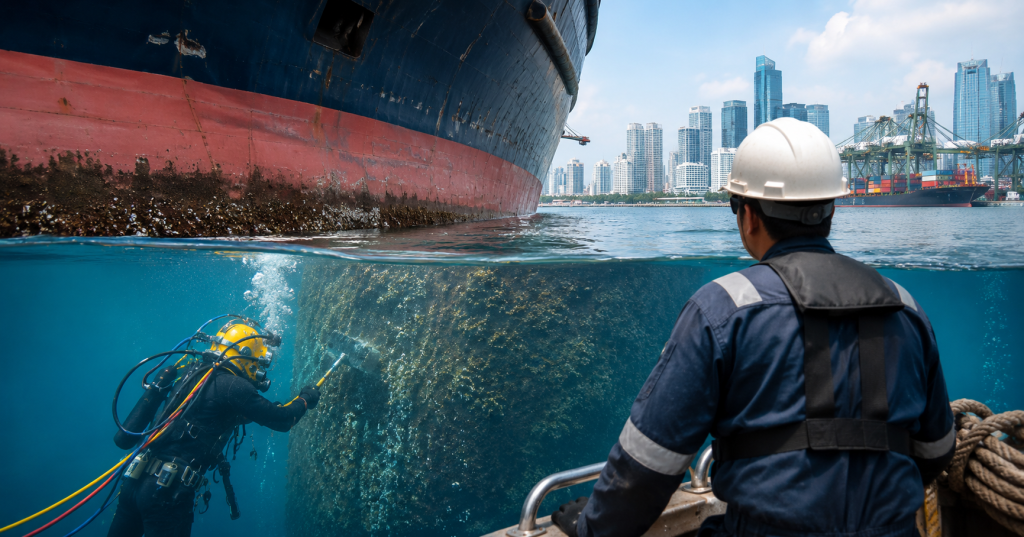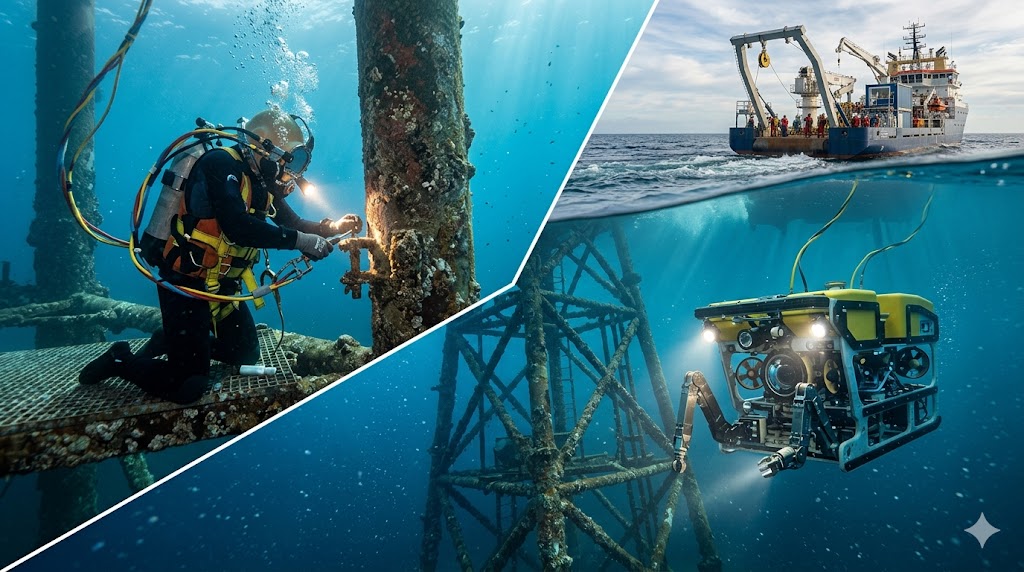
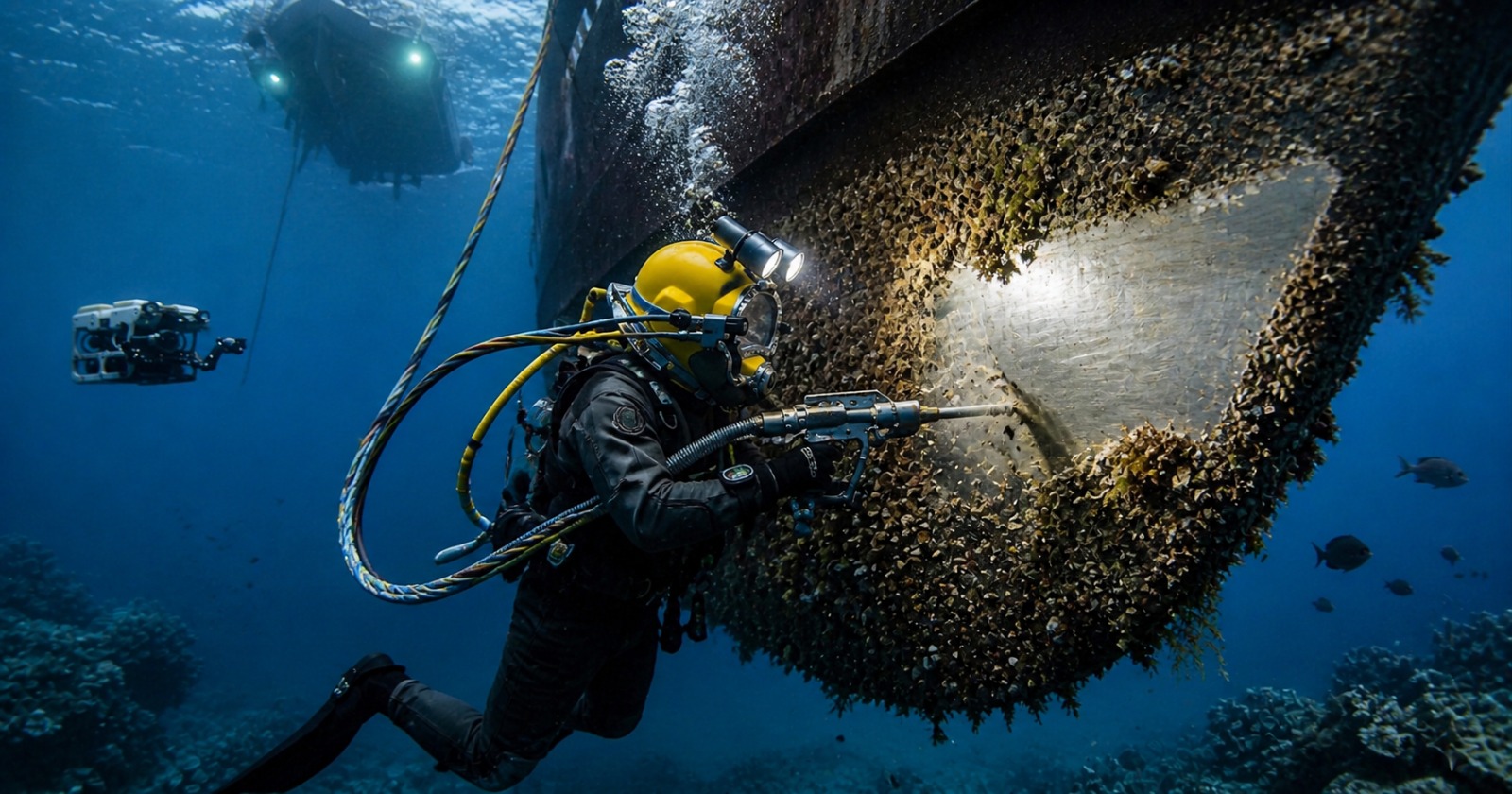
International shipping depends on the effective functioning of the ships, and one issue that remains unseen is biofouling, which can greatly affect the performance, fuel consumption, and compliance with the regulations. Over time, marine life like algae, barnacles, mussels, and seaweed grows on the submerged hull surfaces, and this enhances drag and poses environmental hazards.
In order to safeguard the marine ecosystems, Australia and New Zealand have established stringent biosecurity measures on incoming vessels. Knowledge of Australian and New Zealand standard hull cleaning procedures is now fundamental to ship owners, operators, and fleet managers who are interested in entering the port with ease and ensure their operations remain efficient.
This manual relates the recent compliance requirements, best practices in hull maintenance, and the rationale in proactive cleaning as being an important constituent of contemporary maritime operations.
What Is Australia & New Zealand Standard Hull Cleaning?
Australia & New Zealand standard hull cleaning Industry best practices and maintenance procedures are designed to ensure that vessels arrive at ports within the regional biosecurity expectations.
In lieu of purely considering appearance, these cleaning standards seek to:
- Reduce the transfer of marine pests.
- Minimize aquatic invasive species.
- Improve vessel performance
- Support regulatory compliance
- Take good care of overseas shipping.
Frequent underwater maintenance also enables vessel operators to evade unwarranted check-ups, delays in operations, and extra cleaning needs before vessels can access certain ports.
Why Biofouling Management Matters
The biofouling management is no longer a maintenance issue; it has acquired the role of a significant aspect of international maritime compliance.
Marine growth on a vessel can:
- Increase fuel consumption
- Reduce sailing efficiency
- Accelerate hull corrosion
- Affect propulsion performance
- Introduce invasive marine species into sensitive ecosystems
Regular inspection and preventive cleaning can greatly decrease these risks and make underwater assets last longer.
Understanding Australia’s Biofouling Requirements
To minimize the introduction of non-native marine organisms, Australia has put in place detailed Australia biofouling requirements.
Before allowing vessel entry, authorities may consider a number of factors, including:
Vessel Maintenance History
Operators are expected to have proper cleaning records and maintenance documentation as evidence of responsible hull management.
Anti-Fouling Coating Condition
Protective coats must not be damaged or worn out during the course of operation.
Biofouling Risk Assessment
Inspectors can assess the levels of marine growth on hulls, propellers, rudders, sea chests, thrusters, and other waterproof structures.
Regular cleaning schedules will lessen compliance risks prior to arrival.
New Zealand Biofouling Regulations Explained
New Zealand has one of the most well-known international shipping biosecurity programs in the world.
The New Zealand biofouling regulations in the country demand that the arriving vessels prove that they pose a satisfactory biofouling risk.
Compliance generally involves:
- Indications of frequent hull repairs.
- Records of underwater inspections
- Information about anti-fouling coating.
- Cleaning history
- Voyage information
Lack of such expectations can lead to further inspection, restrictions on operations, or even cleaning before entering.
How Underwater Hull Cleaning Supports Compliance
Professional underwater hull cleaning assists vessels in having optimum performance and reduces excessive marine growth before regulatory approval.
There are a number of benefits to modern cleaning methods:
- Improved hydrodynamic efficiency
- Lower fuel consumption
- Reduced greenhouse gas emissions
- Better propeller performance
- Extended coating lifespan
- Reduced maintenance costs
Properly done and using proper methods, underwater cleaning can also sustain long-run adherence to the regional environmental expectations.
Port Entry Requirements Every Vessel Operator Should Know
The port entry requirements involve more than just having authentic documentation.
Operators should ensure:
- Hull condition is regularly inspected.
- The marine growth is kept to reasonable proportions.
- The records on maintenance are updated.
- Anti-foulings are still effective.
- Routine inspections are made on sea chests and niche areas.
- Risk assessment is done prior to arrival.
Maintenance should be planned well ahead of time to prevent expensive operational delays.
Best Practices for Long-Term Hull Maintenance
A proactive maintenance plan provides superior performance of operations compared to reactive cleaning that occurs after excessive fouling has taken place.
Best practices suggested are:
Schedule Routine Underwater Inspections
Frequent checks determine early marine growth before it is hard to pull off.
Monitor High-Risk Areas
Marine organisms are commonly deposited much more readily than on flat hull surfaces on sea chests, propellers, rudders, thrusters, and intake grilles.
Maintain Anti-Fouling Coatings
Quality coating systems lessen the adhesion of organisms and enhance the maintenance efficiency in the long term.
Keep Accurate Maintenance Records
Compliance is made easy when inspecting ports because there are detailed inspection reports and cleaning documentation.
Work with Experienced Marine Service Providers
Professional underwater teams operate with the right equipment and clean up techniques that are environmentally friendly and promote regulatory requirements.
Benefits Beyond Regulatory Compliance
Having a clean hull provides benefits beyond just meeting biosecurity officials.
Operators often experience:
- Improved vessel speed
- Lower fuel costs
- Reduced carbon emissions
- Enhanced propulsion efficiency
- Prolonged periods of dry docking.
- Reduced maintenance costs in the lifecycle.
- Improved operational reliability
Such operational enhancements help in reducing operating expenses during the service life of a vessel.
Frequently Asked Questions (FAQs)
Q.1 What is the reason for hull cleaning prior to entering Australia or New Zealand?
Ans: Both nations have stringent biosecurity measures to limit the proliferation of invasive marine species. The properly maintained hull makes vessels fulfill the expectations of the inspections and reduces delays.
Q2. What is biofouling?
Ans: Biofouling is the growth of marine organisms like algae, barnacles, mussels, and seaweed on the submerged surfaces of vessels.
Q3. What is the frequency of cleaning underwater hulls?
Ans: The frequency of cleaning varies with the vessel type, route to operation, water environment, performance of the coating, and trade patterns. Consistent checks assist in deciding the proper time.
Q4. What should be given particular consideration?
Ans: Marine growth is most susceptible to sea chests, propellers, rudders, stabilizers, intake grilles, and other areas in the niche.
Q5. Does normal hull maintenance contribute towards fuel efficiency?
Ans: Yes. Eliminating overgrowth in the sea leads to less hydrodynamic resistance, which means that the vessels can run more efficiently, using less fuel.
Conclusion
The operation of modern vessels is urgently required to be compliant with Australia and New Zealand standard hull cleaning practices. Biofouling management, professional underwater hull cleaning, and compliance with Australian biofouling requirements, New Zealand biofouling regulations, and port entry requirements can protect marine ecosystems, enhance the efficiency of vessels, and minimise operational risks.
Through a proactive maintenance approach and collaboration with established marine service companies, vessel owners can achieve the following benefits: easy entry into port, reduced operational expenses, enhanced fuel efficiency, and sustained compliance with regulations. Preventive hull maintenance is not just a biosecurity need; it is also a sound business decision, and it can contribute to efficient and sustainable maritime operations.