In the difficult world of offshore engineering, the success of a project is decided many years prior to the first part of the project being submerged in the water. Since the installation of the massive oil and gas platforms all the way to the maintenance of the critical port infrastructure, the marine environment requires a certain degree of precision that cannot be achieved with the help of standard construction. Marine construction support refers to the entire ecosystem of services, equipment, and highly skilled personnel that transform complex underwater designs into reality.
The specialized support has shifted its value from a utility to that of a mechanical necessity as offshore projects are moved out to deeper water and a more volatile environment. Effective support also means that the projects are not just completed on time, but are also constructed in such a way that they can withstand the unceasing power of the ocean over decades.
What is Marine Construction Support?
Marine construction support can be described as an integrated scope of technical services and logistical support needed to plan, carry out, and maintain offshore and underwater structures. Marine projects have to consider hydrodynamics, pressure, limited visibility, and a corrosive environment as opposed to terrestrial construction.
A professional marine construction service is the interface between the engineering design and the actual application of the construction. Be it offshore construction support of a wind farm or refurbishment of a commercial jetty, these services provide the tactical (or shall we say the) boots on the ground, or rather the divers in the water, that is required to be successful.
Key Services in Marine Construction Support
A subsea project needs a multi-faceted approach in order to implement the project. The support that is of high quality usually covers:
1. Subsea Installation
It is herein that the essence of offshore work is found. Subsea installation support refers to the proper positioning of pipelines, templates, manifolds, and wellheads. Components that weigh in hundreds of tons are installed into centimeters of the spaces they are to occupy.
2. Diver-Assisted Operations
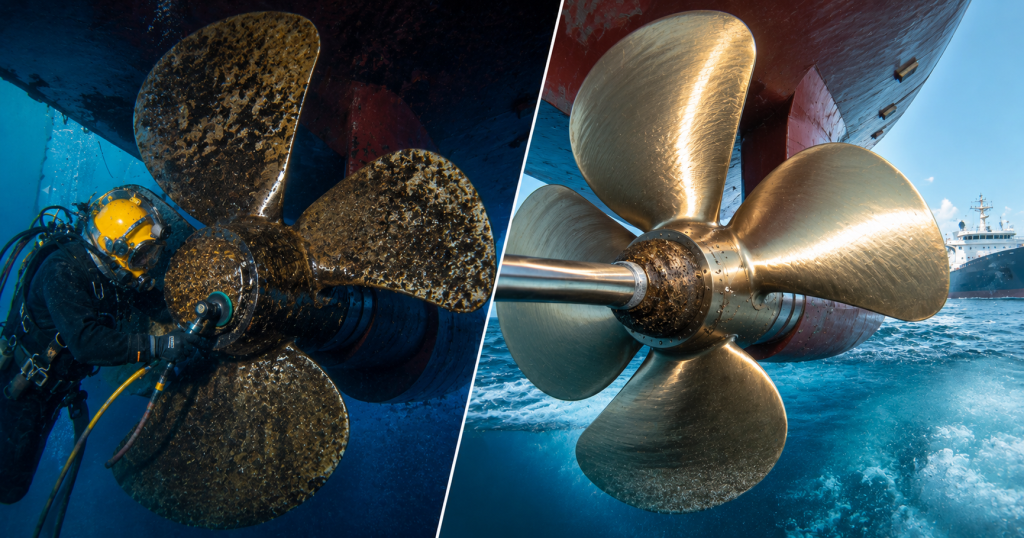
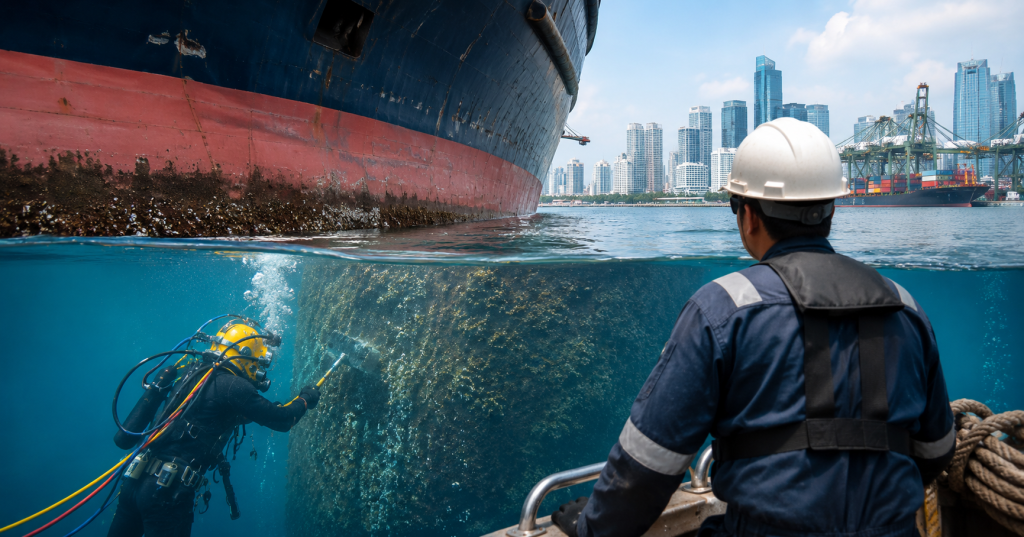
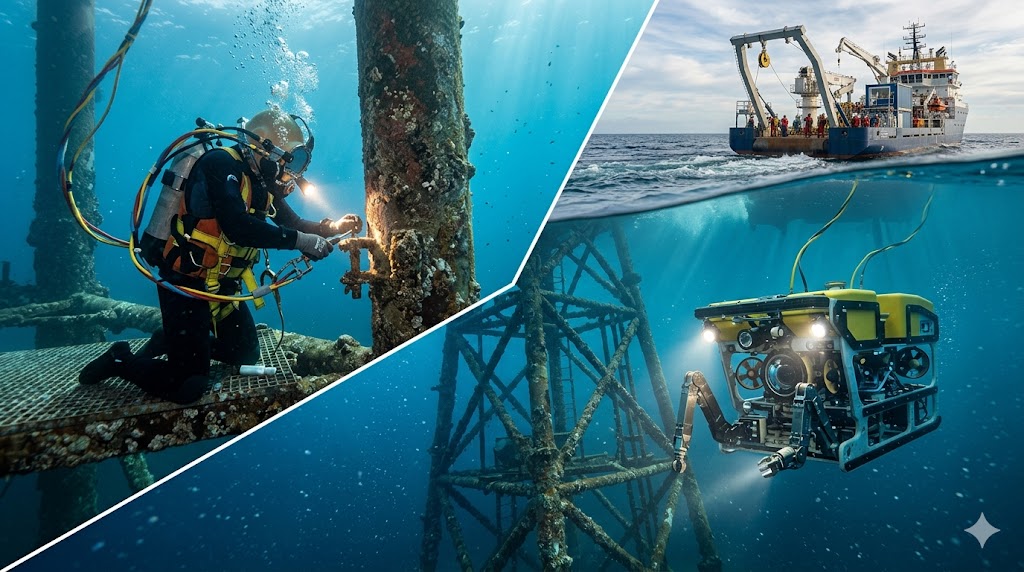
Although in the area of robotics, much has been advanced, the human aspect cannot be substituted in intricate processes. Complex underwater welding, tensioning of bolts, and hands-on inspections where a sense of touch is necessary in quality control are accomplished through diver-assisted construction.
3. ROV Support
The Remotely Operated Vehicles (ROVs) are the workhorse of deep-water projects. Support services of ROV provide real-time HD video surveillance, trash collection, and mechanical intervention at levels that are not accessible to humans.
4. Lifting and Rigging
Lifting offshore is a very risky task. The complex rigging to transport the components of supply vessels to the seabed, taking into consideration swell, heave, and dynamic loading, is handled by support teams.
Applications of Marine Construction Support
These services are high-conversion needs of the following sectors:
- Offshore Oil & Gas: Since the construction support of the offshore platforms, all the way up to legacy decommissioning.
- Port and Harbor Development: The construction of new berths, breakwaters, and terminal foundations.
- Marine Pipeline Installation: The subsea arteries of energy and water flowing between the regions are laid.
- Coastal Infrastructure: Construction of sea walls, bridges, and offshore intake/outfall structures of power plants.
Importance of Marine Construction Support
What is the reason why specialized support is necessary?
- Risk Mitigation: The sea is so merciless. Professional support detects areas of potential failure- like instability of seafloor or weariness of equipment- before they cause accidents.
- Regulatory Compliance: Projects should comply with the strict international maritime laws and environmental regulations.
- Marine Project Support Services: Coordination of surface vessels, divers, and subsea assets prevents the creation of bottlenecks in a multi-million dollar project.
Equipment Used in Marine Construction
In order to offer the highest level of underwater installation services, contractors employ a special fleet:
- Diving Systems: This includes decompression chambers, as well as surface-supplied air systems to dive deep into the waters, or to nitrox diving.
- ROV Tooling: Special manipulators that can cut, clean, and torque test underwater valves.
- Marine Cranage: Heave-compensated cranes, which cancel the effect of the waves to hold a load steady.
- Underwater Welding and Cutting: Special exothermic welding torches and hyperbaric welding habitats.
Benefits of Marine Construction Support
The payback period of professional support lies in the long-term integrity of assets offshore:
- Better Project Efficiency: Smoother logistics will result in fewer idle days of the costly offshore vessels.
- Improved Safety measures: Strict dive procedures and ROV surveillance are contributing to the reduction of the Lost Time Injury (LTI) rate.
- Lower operational risks: Precise underwater mapping is used to avoid destruction of the already laid pipelines or cables during the installation process.
- Cost-Effective Implementation: Implementing it once and only once will save the colossal cost of rework or emergency repairs in the future.
Challenges in Marine Construction Projects
Every project must overcome significant offshore construction challenges:
- Environmental Flux: The weather and big currents can stop your operations within several minutes.
- Logistical Complexity: The process of supplying materials and manpower hundreds of miles apart, from the nearest port.
- Deep-Water Pressures: The technical demands of seals, materials, and diving systems grow exponentially as the projects go deeper.
How to Choose the Right Marine Construction Partner
In choosing a marine engineering firm or subsea contractor, consider their preparedness on the basis of:
- Industry Certification: Do they belong to any established organizations, such as IMCA (International Marine Contractors Association)?
- Safety Culture: Are they able to give a multi-year history of safe operations in high-risk environments?
- Internal ROV and Certified Dive Teams: Do they own and operate their own fleet of ROVs and certified dive teams, or do they subcontract the critical work?
Choose a trusted marine construction company for reliable offshore support services.
Cost of Marine Construction Support Services
The marine construction cost is a depth, duration, and equipment spread required variable.
- Planning vs. Execution: Spending more in the “Support” and “Planning” phase has the overall project cost reduction, since the costly delays of the “Execution” phase are avoided.
Expert Tip: The marine world is evaluated by how much it is used, that is, its Vessel Utilization. An integrated support partner will decrease the number of specialized vessels needed, which will greatly reduce the daily burn rate of the project.
Future Trends in Marine Construction
The sector is biased towards hi-tech marine construction technology:
- Digital Twins: Developing a 1-to-1 virtual representation of the construction site under the sea that integrates in real-time as the components are installed.
- Autonomous Work Subs: The next generation of ROVs that have the capacity to carry out routine installation tasks with the least amount of human intervention.
- Eco-Friendly Materials: It will develop subsea grouts and concretes that will grow corals instead of just offering structural support to the coral reefs.
Conclusion: Supporting Offshore Projects with Expertise
Marine Construction Support is more than a logistical support; it is the basic backbone that enables us to construct and maintain the most impressive offshore assets in the world. With a combination of human divers, robotics, and high-quality engineering, support services help to push the limits of what can be done under the sea.
Get in touch with us today and enjoy the services of marine construction support experts.
Frequently Asked Questions (FAQ)
Q1. Why should an ROV be used over a Diver to construct?
Ans: Divers can offer a tactile or dexterity that is real-time and can make real-time mechanical decisions on complex tasks. The deeper waters (300m +) and the long-duration monitoring of such waters are also provided by the deployment of ROVs.
Q2.What do you do to weld underwater?
Ans: Underwater welding is performed either by wet welding (entering a special dry pressurized chamber around the weld point and using special electrodes) or by hyperbaric welding (creating a dry, pressurized chamber around the weld point and using special electrodes).
Q3. What is ‘Subsea Tie-back’ support?
Ans: It consists of connecting a new subsea well to an existing production platform by a series of pipelines and umbilicals, a common activity in marine construction support.
Q4. What impacts does weather have on marine construction?
Ans: Every vessel has operating limits to the height of the waves and the wind speed. In case they are overstepped, the operation has to be stood down in order to ensure the safety of the crew, as well as the integrity of the equipment.
Q5. What is ‘Splash Zone’ protection?
Ans: The most corrosive area is the area where the structure meets the water surface. Support services usually involve the use of special coatings or wraps to cover piles and jackets in this zone.