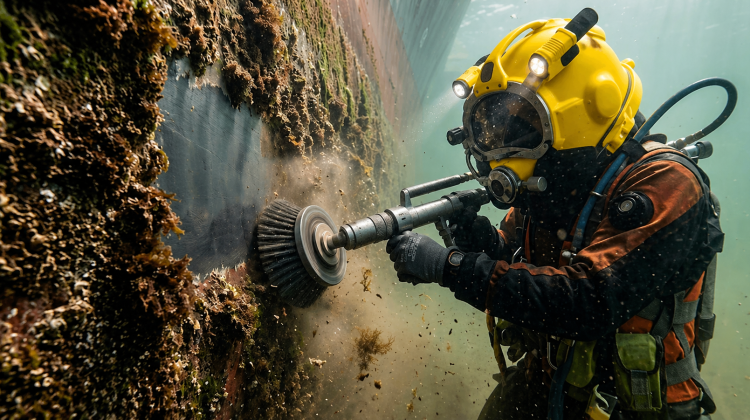
Hull Cleaning Singapore Explained: Biofouling Risks, Cleaning Methods, Vessel Efficiency, and Best Practices
Introduction
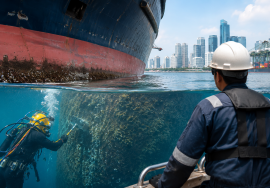
The underwater hull of a vessel is constantly subjected to sea water, aquatic life, fluctuating currents, and different working conditions. Slime, algae, barnacles, mussels, and other organisms may attach themselves to the hull and underwater appendages over time. The result of this build-up, referred to as marine biofouling, may lead to an increase in drag, a decrease in propulsion efficiency, and a rise in fuel consumption.
In the case of vessels that are in active maritime settings like Singapore, routine underwater checks and repairs are some of the key aspects of responsible vessel management. Hull cleaning Singapore services can assist ship operators in managing marine growth, maintaining underwater surfaces, and facilitating effective operations of vessels without necessarily having to dry dock them.
This guide discusses the importance of hull cleaning, the way professional cleaning is carried out, the areas of the underwater that need to be maintained, and how the vessel performance can be enhanced by performing regular maintenance.
What Is Marine Biofouling?
Marine biofouling is the growth of organisms on submerged surfaces. These organisms may become attached to the hull, propeller, rudder, sea chest, thrusters, stabilizers, and other underwater structures on a ship.
Biofouling typically occurs in phases. Initially, a thin layer of slime can be generated, and then larger organisms like barnacles and shellfish can attach. Unless this growth is managed, it may become harder to get rid of and can cause interference with the hydrodynamic performance of the vessel.
Efficient marine biofouling management is thus a combination of periodic inspection, appropriate anti-fouling systems, maintenance planning, and appropriate cleaning techniques.
Why Is Hull Cleaning Important for Vessels in Singapore?
Singapore is a busy maritime centre in the world that has vessels passing through or in waters where marine business is very active. Tropical areas with warm climates may also promote the growth of marine organisms on submerged surfaces.
Over-fouling may lead to a number of operational issues. Rougher hulls result in extra resistance to motion when passing through water and may influence speed and fuel efficiency. Propeller fouling may also disrupt the performance of propulsion.
Professional Hull cleaning Singapore services will offer vessel operators a chance to deal with marine growth before it becomes a more serious maintenance issue.
Regular cleaning may help to support:
- Better hydrodynamic efficiency
- Improved propulsion performance
- Reduced resistance
- Lower fuel consumption
- Cleaner underwater surfaces
- Improved general ship maintenance.
Underwater Hull Cleaning Methods
The correct cleaning procedure varies with the vessel, the state of the coating, the level of fouling, the area, and the environmental factors.
Mechanical Cleaning
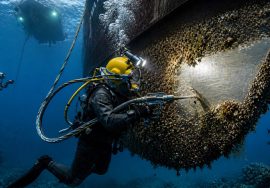
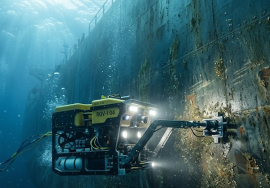
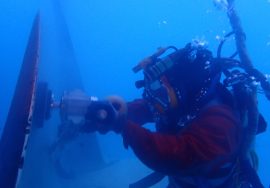
Slime, algae, and more firmly attached marine life can be removed using mechanical systems. The cleaning pressure and equipment used should be chosen wisely not to unduly obliterate the protective coating on the vessel.
Brush-Based Cleaning
Special underwater brushes can be used to scrape marine growth off appropriate hull surfaces. The choice of brush is significant due to the aggressive cleaning that may ruin some anti-fouling coating.
High-Pressure Cleaning
Special underwater surfaces and foulings may be controlled using controlled water pressure. The coating and hull condition are evaluated by professional operators, who decide which kind of pressure and equipment to use.
Specialized Niche-Area Cleaning
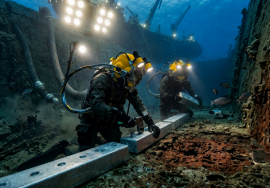
Not large flat hull sections are some of the most important areas. Sea chests, gratings, thrusters, rudders, bilge keels and other niche spaces may harbor marine organisms and need to be carefully inspected and cleaned.
Underwater hull cleaning should not just be aimed at ensuring that the hull appears to be clean. This process should facilitate vessel performance, coating maintenance, environmental accountability, and proper maintenance planning.
Ship Hull Cleaning and Vessel Efficiency
The hull is fouler, giving it more resistance as it traverses water. The extra resistance implies that the vessel might need increased power to propel it to the desired operating speed.
That is why ship hull cleaning may be a significant component of an energy-efficiency and maintenance strategy.
The real advantage varies with factors including the severity and nature of foulings, the design of the vessel, the operating schedule, the hull coating, and propulsion system. Cleaning may thus be scheduled according to the findings of the inspection instead of being scheduled through a fixed schedule only.
To fleet operators, hull condition monitoring used with maintenance records can serve to identify the recurring fouling trends and maximize the cleaning cycles.
Why Propeller Polishing Matters
The maintenance of the hull should not stop at the main hull surface. Another important component that is underwater is the propeller.
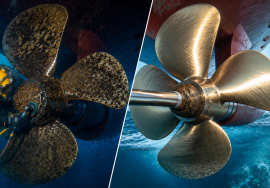
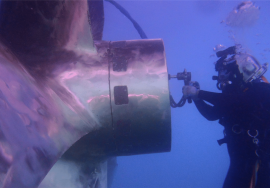
Propeller efficiency can be influenced by marine growth, surf roughness, and deposits on the propeller blades. Propeller polishing can be used to complement broader underwater maintenance services and is used to restore a smoother blade surface in the appropriate cases.
The propeller and rudder, the shaft area, and other appendages can be inspected during an underwater maintenance check to evaluate marine growth, physical damage, corrosion, or other abnormality.
Vessel Hull Maintenance: A Preventive Approach
Proper vessel hull maintenance is often cheaper when issues are detected before extensive fouling or wear occurs.
An effective maintenance program can involve a regular underwater inspection program, recording of fouling conditions, tracking of the performance of anti-fouling coating, cleaning as necessary, and checking niche areas.
Underwater work should also be planned by the operators based on the trading route of the vessel, time spent at anchorage, the speed of the vessel, the condition of the seawaters, and the past maintenance record.
This preventive measure may assist in lessening unforeseen maintenance demands and enable more probable vessel operations.
Environmental Considerations During Marine Growth Removal
Marine growth removal needs to be performed responsibly. The decontamination of organisms out of a vessel in one location may lead to environmental issues when biological material or contaminated wash water is discharged without proper controls.
For this reason, operators are advised to put into consideration relevant local requirements, where the work is being done, the type of fouling, cleaning equipment, capture or containment where necessary, and disposal procedures.
Professional marine growth removal must strike a balance between environmental protection and vessel maintenance needs.
How Often Should a Vessel Be Cleaned?
No standard cleaning schedule can be adopted to fit all vessels. The rate of fouling depends on the type of vessel, system of coating, trading route, water temperature, and speed of the vessel, duration of anchorage, and the environmental conditions in the area.
Vessel operators do not have to rely on a calendar-based approach only because underwater inspections can help them assess the true state of the hull and appendages.
This condition based strategy enables the maintenance personnel to detect the emergent fouling and schedule cleaning activities based on vessel schedules and operations.
Best Practices for Hull Cleaning
An effective underwater maintenance program must start with a check of the hull and its state. Operators are expected to detect the nature and degree of fouling, examine the coating, and be particularly observant of niche areas.
The cleaning technique then can be chosen based on the hull coating, the fouling properties, and environmental conditions. A cleaning process can be followed by documentation of the work with the help of inspection reports, photographs, and maintenance records that can be used later in planning.
Engaging an established commercial diving company can as well assist in ensuring underwater operations are done in an organized manner and safely.
Frequently Asked Questions
Q1. What is hull cleaning?
Ans: The process of removing marine organisms, slime, algae, barnacles, and other deposits on the submerged parts of a vessel to facilitate vessel performance and underwater maintenance is referred to as hull cleaning.
Q2. What is the reason marine growth consumes more fuel?
Ans: Marine growth also makes the underwater surfaces rough and provides extra resistance to the movement of the vessel through the water. This means that the propulsion system might need additional power to travel at the same speed.
Q3. What is to be cleaned other than the hull?
Ans: Submerged zones such as propellers, rudders, sea chests, gratings, thrusters, bilge keels, stabilizers, and other underwater niche spaces where marine growth may occur are significant.
Q4. Is underwater cleaning better than dry-docking?
Ans: Underwater maintenance may enable some cleaning and inspection services to be performed without the vessel going into dry dock. Its applicability varies based on the condition of the vessel, coating, level of fouling, scope of work, and requirements.
Q5. Is there a possibility of hull cleaning damaging anti-fouling?
Ans: It may be when improper equipment, overuse of pressure, or improper cleaning methods are used. The choice of cleaning should hence depend on the nature of the coating manufacturer and the real situation of the hull.
Q6. How often should underwater hull cleaning be carried out?
Ans: The rate of fouling varies with the rate of fouling, the activity of the vessel, the condition of the coating, the trading route, and operating environment. Frequent checks are more useful in deciding when cleaning should be done.
Related Services
Conclusion
Underwater maintenance is a common element in ensuring the efficiency, reliability, and operational readiness of commercial vessels. In the intense maritime conditions of Singapore, managing marine biofouling can assist operators in controlling resistance, propulsion performance, maintenance needs, and environmental aspects.
An anticipated program of Hull cleaning Singapore, which will be assisted by underwater inspection, proper marine growth removal methods, polishing of propellers, and expanding hull care of vessels, will assist in detecting issues before they escalate into expensive operational problems. The selection of an appropriate cleaning method and maintenance scheduling based on the actual hull condition can be a viable tradeoff between performance, cost, coating protection, and responsible marine operations for owners and operators of the vessels.