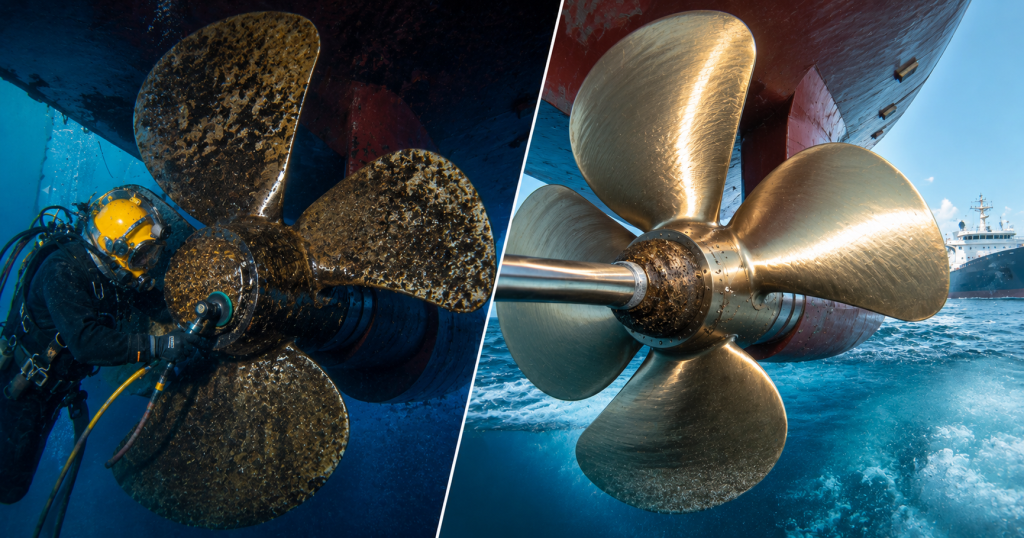
The ocean is a hostile chemical place. The corrosion of a steel-hulled ship is a nautical mile-long battle. In the absence of a strong defense, the salinity and fluctuating temperatures of the seawater will gradually cause the removal of electrons from the steel, resulting in thinning plates, poor welds, and disastrous structural integrity.
The best and internationally accepted way of preventing this is by hull anode installation. Through the principle of cathodic protection, it is possible to cancel out the corrosion reaction near the ship, effectively protecting the main structure of the vessel and greatly increasing the time between the major dry-dock repairs.
What is Hull Anode Installation?
The strategic method of adding metals, or automated electrical systems, to the outside of a vessel is referred to as ship hull anode installation. The aim is to form a controlled electrochemical cell in which the hull is the cathode – the region of the cell which does not corrode.
In a typical hull cathodic protection system, the anodes installed on the system are the “anode,” and they absorb the entire corrosive effect to ensure no damage is done to the steel hull. It is not just a maintenance job but a basic part of the engineering of any ship that is in salt water.
How Cathodic Protection Works
One should have the knowledge of the Galvanic Series to know why the installation of anodes is necessary. When two metals that are not the same are placed in an electrolyte (seawater) and are connected, the more active metal will be corroded, and the more noble metal will be shielded.
A marine cathodic protection system is an efficient way of transferring the natural electricity flow. The current is conducted out of the steel to the hull by the introduction of an anode with a higher negative potential than the steel. It is this circulation of electric current that causes the iron in the steel not to react with oxygen and water to create rust.
Types of Anodes Used in Hull Installation
The right material is very important in terms of the longevity and efficiency of the system:
1. Zinc Anodes
The saltwater conventional option. Installing zinc anodes is very dependable and gives a steady supply of current. Nevertheless, zinc is less efficient in brackish or freshwater, where it may form a protective crust that blocks the protective current.
2. Aluminum Anodes
The industry standard in the present day. Installing an aluminum anode provides better “charge density,” i.e., an aluminum anode can cover more surface area per kilogram than zinc. They are also more eco-friendly and can survive in different salinities.
3. Impressed Current Cathodic Protection (ICCP)
In large commercial vessels, an ICCP system ship hull configuration is common. ICCP utilizes permanent titanium anodes and an external DC power source, instead of the natural decay of a sacrificial metal. The system automatically regulates the current according to the speed of the ship and the conditions of the water.
Importance of Hull Anode Installation
Disregard of the fitness of your anodes is a lottery on the integrity of the structure of your ship. Regular and professional installation guarantees:
- Corrosion Protection Ship Hull: This is to avoid pitting that may form localized holes in the hull, although the rest of the plate may appear healthy.
- Structural Integrity: To retain the original scantlings (thickness) of the hull to Class requirements.
- Fuel Efficiency: A pitted, corroded hull would cause a huge amount of drag in the form of skin friction, and thus consume more fuel, as much as 10-15 times more.
- Compliance: The vessel must be built to the safety standards of the IMO and the big classification societies such as ABS, DNV, and Lloyd’s.
Hull Anode Installation Process
A professional hull anode installation is a very meticulous process that demands clean surfaces and ideal electrical bonding.
- Check-up of Hull Condition: Determining the extent of present corrosion and locating hot spots such as the rudder, propeller, and sea chests.
- Surface Preparation: This is a near-white metal finish on the areas of attachment using grinders. Between the hull and the anode, paint or rust will prevent the protective current.
- Positioning: Anodes should be placed on a determined “shadowing” plan to be sure that every section of the hull gets current.
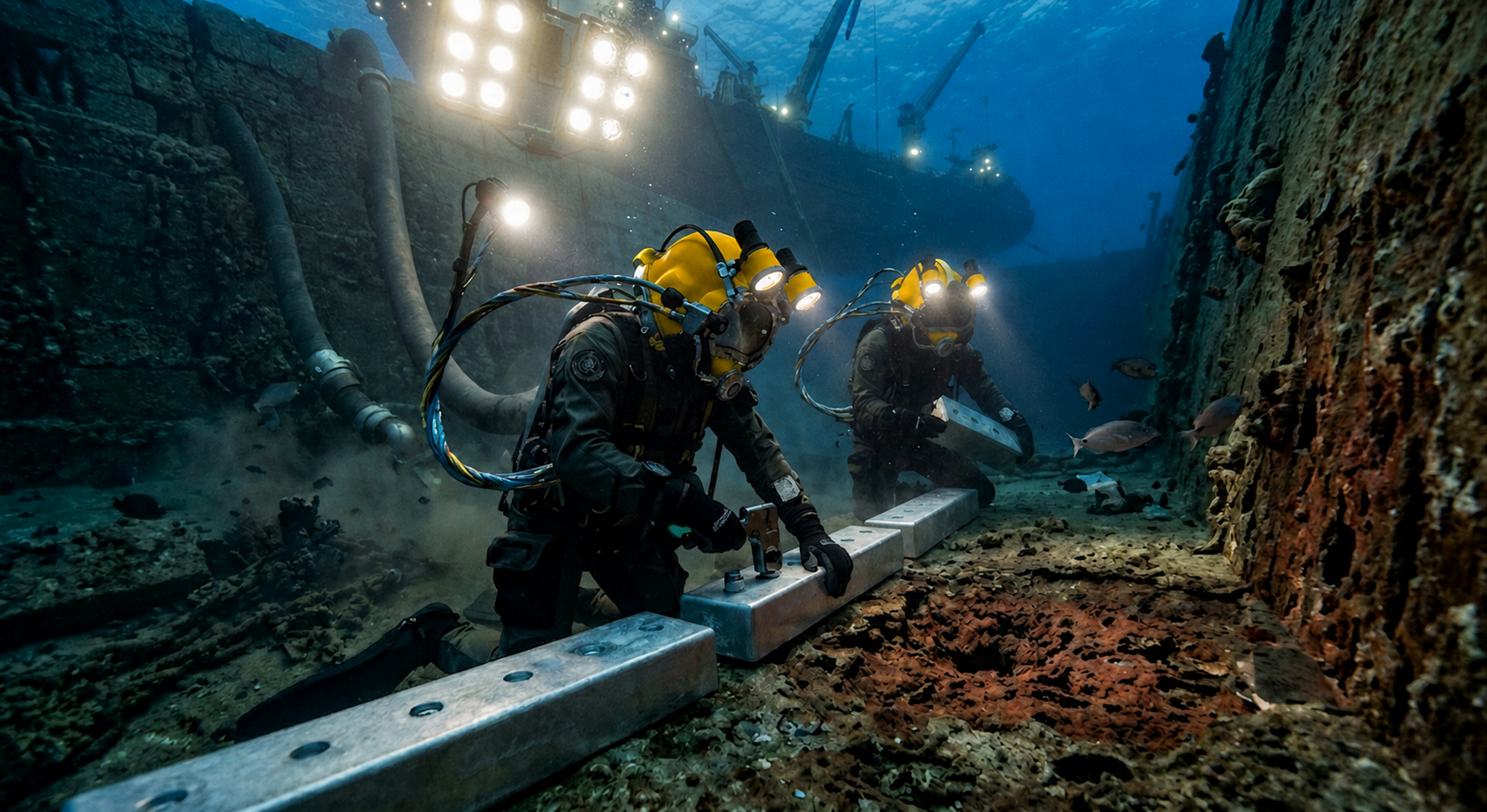
- Welding or Bolting: Welding of the anode. Underwater anode installation: Welding is typically performed using a wet-welding technique, whereas dry dock anode installation can be performed by conventional welding or by attaching the anode to pre-installed studs.
- Testing and Verification: Testing of hull; verifying the potential of the hull to be inside the safe range (usually between -850mV and -1050mV) with a reference electrode.
Applications of Hull Anode Installation
This is a high conversion need for all marine stakeholders:
- Commercial Ships: Bulk carriers and tankers, which must spend the most time between dry docks.
- Offshore Vessels: Offshore vessel corrosion protection is a significant issue with platforms and OSVs that spend significant durations in high-current locations.
- Naval Ships: High-reliability systems are needed to ensure mission readiness.
- Marine Infrastructure: Coating the hulls of FPSOs and FSOs that are not moving.
Benefits of Hull Anode Installation
Professional asset integrity of marine vessels has a high ROI:
- Long Vessel Life: Eliminating the costly process of steel renewal or replacement of plates during major surveys.
- Better Operational Efficiency: An unfretted hull in good condition ensures maximum hydrodynamic efficiency.
- Improved Safety: Decreasing the danger of breaches in hulls and water infiltration.
- Resale Value: A vessel that has a recorded and high history of quality cathodic protection is priced much higher in the secondary market.
When Should Anodes Be Replaced?
The design of the anodes is to be consumed. Another general guideline for underwater anode replacement is that they should be replaced once they have consumed 50 to 70 percent. When you leave them until they are completely dry, the hull will start corroding at once.
Expert Tip: Anodes will dissolve more rapidly in tropical waters that are warm or have a lot of industrial runoff. Annual check-ups of consumption rates through annual In-Water Surveys (IWS) are suggested.
Challenges in Hull Anode Installation
To do such work, a skilled marine maintenance company is necessary:
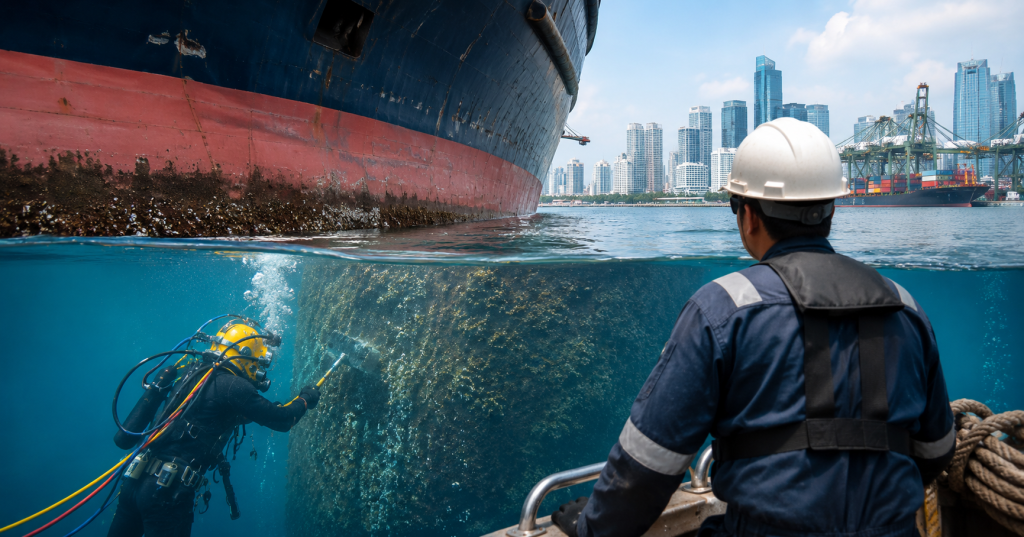
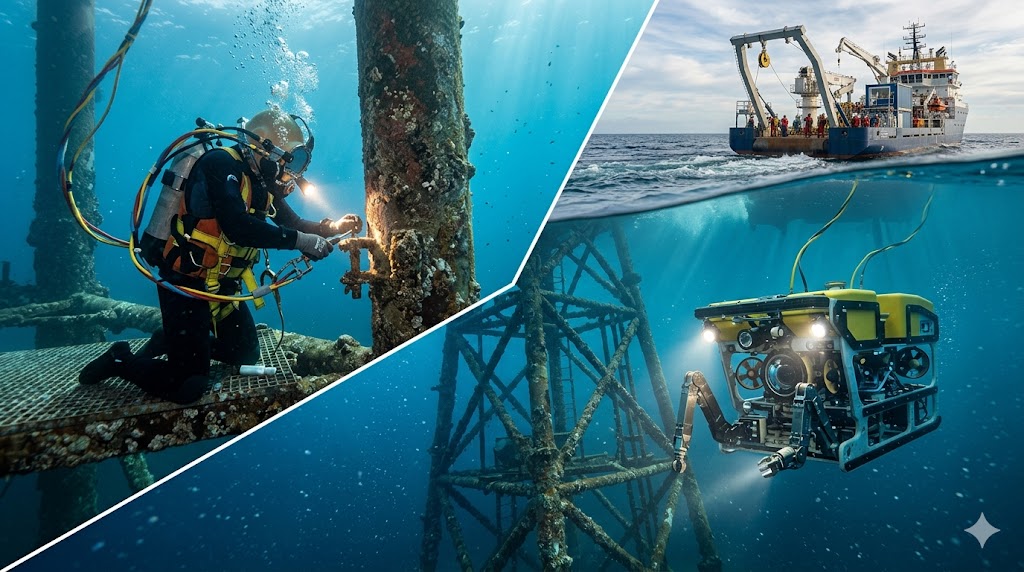
- Underwater Complexity: Welding underwater needs certified commercial divers and special equipment to provide high-quality welds.
- Coating Compatibility: The coating applied around the anode (the so-called dielectric shield) should not be broken off, or it will become easy to overprotect the surrounding steel.
- Environmental Conditions: Weak visibility or strong currents in ports may postpone the installation schedules.
How to Choose the Right Marine Service Provider
In the process of choosing a partner for ship repair services, give attention to:
- Engineering Support: Do they compute the mass of the anode they need, or do they merely guess using the length of the ship?
- Material Certification: Have the anodes cast to international military or ISO standards to prevent “passivation” (when the anode ceases working).
- Experienced Labor: Certified welders (AWS/ASME) in dry and wet welding.
Select a reputable marine repair firm to be able to install hull anodes.
Cost of Hull Anode Installation
The hull anode installation cost is a variable of the total “Anode Mass” and the labor needed.
- Sacrificial Systems: These are low when started, but need to be replaced after every two to five years.
- ICCP Systems: Costs more upfront (20k-100k+), yet offers greater protection (up to 20+ years) and requires fewer parts replacement.
Expert Tip: Aluminum anodes are the most optimal Amps per Dollar ratio in the marine industry.
Future Trends in Marine Corrosion Protection
The trend is toward state-of-the-art corrosion protection technology:
- Smart Anodes: Sacrificial anodes have integrated sensors that notify the crew when 80 percent of them have been used.
- Hybrid Systems: Small sacrificial anodes, which are used on dead spots, are combined with a primary ICCP system on the main hull.
- Green Alloys: The removal of cadmium in aluminum anodes to obtain more rigorous environmental certifications for the Green Ship.
Conclusion: Protect Your Vessel with Effective Anode Installation
The cheapest insurance policy that a shipowner may purchase is hull anode installation. You can preserve the structural integrity of your vessels, keep your crews safe, and increase the service life of your fleet by knowing the science of corrosion, using high-quality materials and installations. The price of prevention in the ocean is a quarter of the price of repair.
Visit us in order to get the best hull anode installation services.
Frequently Asked Questions (FAQ)
Q1. Is it possible to use Zinc anodes in fresh water?
Ans: No. Zinc develops a hard oxide layer in freshwater, and this prevents its functionality. In the case of freshwater, Magnesium or certain Aluminum alloys are needed.
Q2. What number of anodes do I want on my ship?
Ans: This is calculated based on a Current Demand calculation which takes into consideration the total wetted surface area of the ship, the paint type applied, and the intended time between dry docks.
Q3. What is a Dielectric Shield?
Ans: It is a thick and high-build coating placed about the base of an ICCP anode to eliminate the high-intensity current ruining the paint on the surrounding hull.
Q4. Is it possible that anodes can be put in place when the ship is afloat?
Ans: Yes. Underwater anode installation can be done by certified commercial divers using wet-welding or specialty clamps to ensure that the ship does not have to visit a dry-dock.
Q5. Why do my anodes not fade away?
Ans: When your anodes appear to look new in a year, then they are probably passivated. That is, they are not working, and your hull is probably getting corroded instead. This normally occurs as a result of low-quality metal alloys.