Introduction
Marine structures such as ships, offshore property, ports, jetties, pipelines, seawater intakes, among others, work in harsh underwater environments. The continuous contact with seawater, marine flora and fauna, corrosion, current, and physical attack may slowly degrade their structural integrity and performance.
Regular underwater maintenance and inspection will enable identification of these problems before they become costly repairs or operational problems. It is here that underwater marine services are significant in the maintenance of commercial vessels and marine structures.
Special commercial diving teams can be used in the inspection of hulls and the removal of marine vegetation, and in welding, cutting and structural inspection, which is not always accessible due to the surface.
What Are Underwater Marine Services?
Underwater marine services include the speciality of inspection, maintenance, repair, cleaning and building operations performed under the waterline.
The services can support:
- Trading boats and ships.
- Ports and harbours
- Jetties and wharves
- Piers and marine ports.
- Offshore structures
- Submarine pipelines and cables.
- Water intake systems
- Piles and underwater foundations.
The scope of work varies on the condition of the asset, the working environment, the maintenance needs and the inspection goals.
These tasks are performed by professional teams that consist of trained commercial divers, underwater tools, surface-supplied diving systems, inspection equipment, and proper safety procedures.
Why Underwater Inspection Is Important
Even minor defects in the underwater system may turn out to be a significant structural or functional issue when left unnoticed.
Underwater inspection services enable the operators to gain insights into the real state of buried assets without necessarily taking them out of service or waiting until the next regular dry-docking event.
Common inspection practices are:
- Hull condition surveys
- Corrosion assessment
- Identification of cracks and damage.
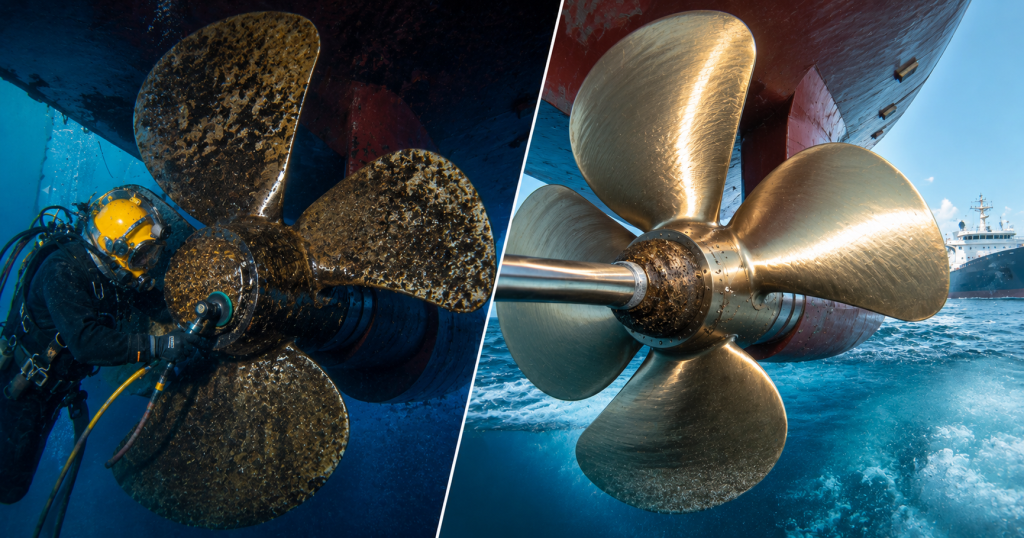
- Inspection of propeller and rudders.
- Sea chest inspection
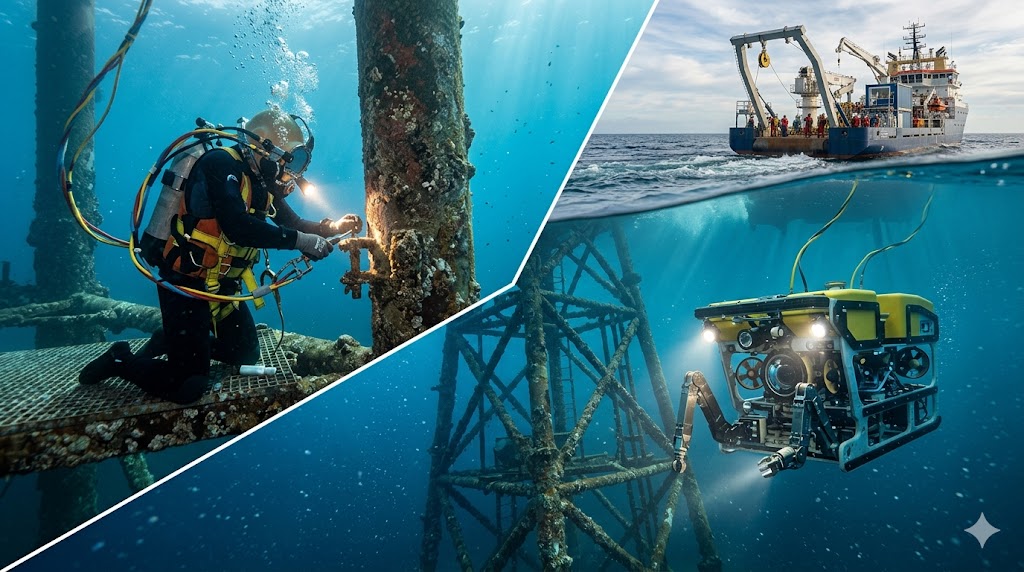
- Pile inspection
- Anode condition assessment
- Marine growth evaluation
- Underwater structural surveys
The results of the inspections can then be recorded in terms of photographs, video footage, measurements and technical reports to plan maintenance.
Marine Structure Inspection and Asset Condition Monitoring
Marine infrastructure is subjected to constant exposure to the movement of water, corrosion, sediments, marine life and mechanical loading.
The marine structure inspection may be used in detecting the decay of assets like steel piles, concrete structures, quay walls, jetties, bridges, and offshore foundations.
Divers may check:
Steel Components
Corrosion, deformation, breakage, cracks, and coating corrosion and other defects can be sought by teams.
Concrete Structures
The underwater inspections can reveal cracking, spalling, exposed reinforcement, erosion, or any other indication of deterioration.
Piles and Foundations
Pile inspection may assist in evaluating whether underwater structural elements are in appropriate condition and also those areas that may need additional engineering evaluation.
Timely monitoring of conditions can provide asset owners with improved data on how to prioritize maintenance and control long-term infrastructure expenses.
Underwater Cleaning for Ships and Marine Assets
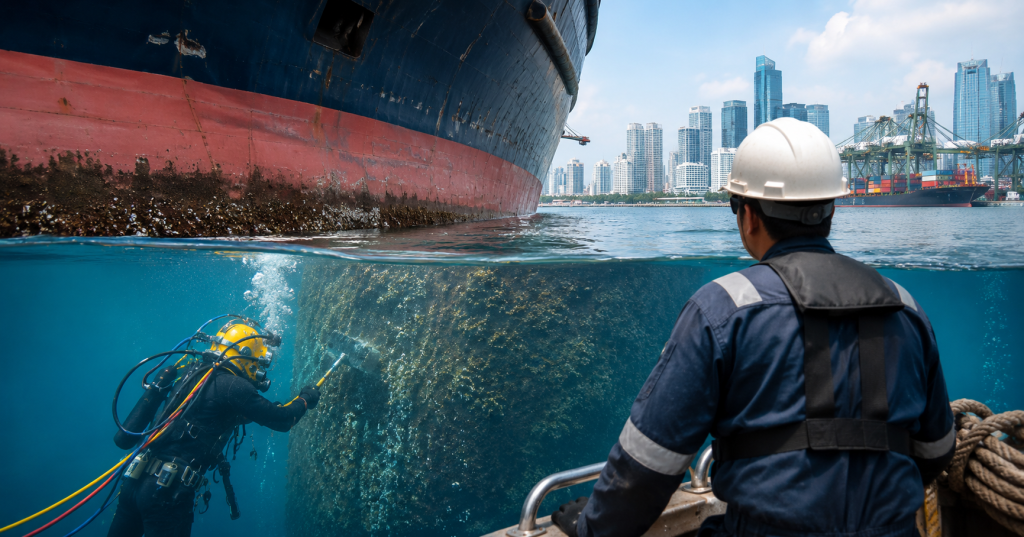
Sea vegetation may grow quickly on the underwater surfaces. Surface roughness may be increased by algae, slime, barnacles, shellfish and other organisms and influence vessel performance.
Professional cleaning activities can involve:
- Hull cleaning
- Propeller polishing
- Sea chest cleaning
- Grating cleaning
- Thruster cleaning
- Marine growth removal
- Underwater niche-area cleaning
The cleaning methods used should bear in mind the state and nature of the protective coating, the degree of foulness, the demands of the environment, and the place where the work is being done.
Routine maintenance may aid vessels to have efficient underwater surfaces and minimize the chances of over-fouling.
Underwater Maintenance Services
The underwater maintenance services offer a viable means of responding to the chosen maintenance requirements during the time that an asset is in water.
Work may consist of:
- Anode replacement
- Propeller maintenance
- Rudder maintenance
- Sea chest maintenance
- Underwater installation of components.
- Plugging and blanking
- Structural maintenance
- Minor emergency repairs
To commercial operators, the ability to carry out appropriate maintenance underwater can minimise unwarranted downtime and can be used to organise work based on the schedules of the vessels.
Nonetheless, underwater work must be evaluated by the project first to find out whether it is technically suitable and safe.
Underwater Repair Services
The area below the waterline may be damaged due to corrosion, collision, grounding, operational wear or environmental conditions.
Underwater repair services can repair the chosen defects without necessarily putting the vessel or structure in dry dock.
Underwater repair work may involve temporary or permanent repair options depending on the condition and engineering requirements, replacement of components, structural reinforcement, sealing, and other special interventions.
The beginning of the process is usually a good inspection since the manner of repair should be founded on the real state of affairs and extent of damage.
Underwater Welding and Cutting
Certain projects involving marine repairs and construction are limited to special hot-work requirements below the waterline.
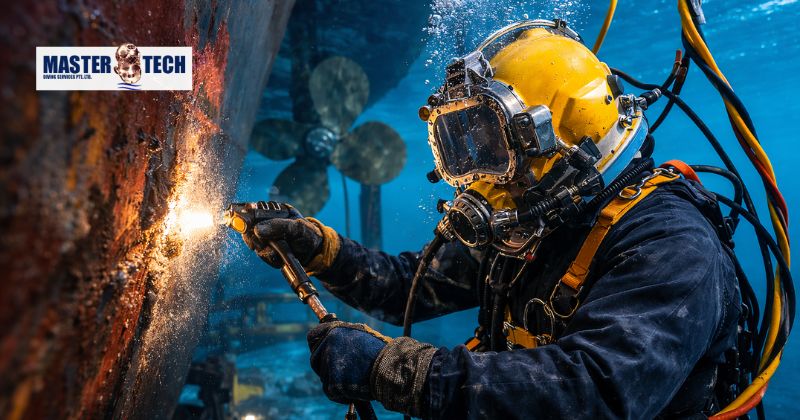
Appropriate structural and maintenance applications of underwater welding and cutting can be applied in repair work, removal of damaged parts, installation activities, and marine construction projects.
Such operations demand skilled human resources, proper diving systems, special equipments, proper planning of work and close monitoring of safety risks.
Underwater welding or cutting is dependent on issues of material, water depth, and structural needs, site conditions, and the applicable repair methodology.
When Should a Vessel or Marine Structure Be Inspected
No one-fit-all inspection schedule can be used on all assets. The frequency of inspection is based on the type of vessel, its age, operational conditions, structural integrity, trading history, and past inspection results, as well as the relevant requirements.
An underwater inspection may be particularly valuable:
- Prior to or subsequent to significant journeys.
- After grounding or collision.
- In case of abnormal vibration.
- In the case of suspicion of corrosion.
- Before planned maintenance
- During planned underwater surveys.
- When marine vegetation is extensive.
- Following underwater construction works.
Condition-based inspection enables operators to act on the real conditions of the assets rather than having to act on a predetermined maintenance schedule.
Benefits of Professional Commercial Diving Services
Professional Commercial diving services offer specialized underwater entry to verify, upkeep, build and fix.
To ship owners and operators of marine infrastructure, the potential advantages are:
- Reduced operational disruption
- Early detection of defects.
- Better maintenance planning
- Enhanced reliability of underwater assets.
- Less unwarranted dry-docking for appropriate tasks.
- Quick response to underwater incidents.
- Detailed inspection documentation
The experienced diving contractors also know how to coordinate the work underwater with the operations of the vessels, the state of the site, the permits, the safety procedures, and the requirements of the project.
How to Choose an Underwater Marine Contractor
Selecting the appropriate contractor is a significant aspect of any underwater project.
Before appointing a service provider, operators should consider:
- Relevant experience- Find experience with similar vessels or structures.
- Qualified staff- ensure that the staff involved in diving and supervisors are properly trained and certified.
- Equipment capability – Make sure that the contractor possesses appropriate equipment for surface-supplied diving and underwater inspection.
- Safety procedures – Read the operational and emergency procedures of the contractor.
- Reporting ability – Assure that findings of the inspection can be presented in straightforward technical reports, photographs, video and measurements where necessary.
- Project planning – Ensure scope, risks, work method, and responsibilities are well laid out at work commencement.
Frequently Asked Questions
Q1. What are underwater marine services used for?
Ans: They are primarily employed in underwater inspection, cleaning, maintenance, repair, construction assistance, welding, cutting and condition assessment of ships and marine structures.
Q2. Is it possible to conduct underwater inspections when a vessel is afloat?
Ans: Yes. Depending on the scope of inspection, the condition of a vessel, its location, and the requirements, many checks can be conducted when a vessel is on the water.
Q3. What is underwater to be inspected on a ship?
Ans: Typical locations are hull, propeller, and rudder, sea chest, and thrusters, anodes, bilge keels, and other submerged areas or niche areas.
Q4. What is the difference between underwater inspection and underwater maintenance?
Ans: Inspection identifies the state of an underwater asset, and maintenance consists of measures to maintain, repair, or enhance the state.
Q5. Are underwater repairs able to prevent dry docking?
Ans: Underwater work can minimize or delay the necessity to dry dock in some appropriate repair and maintenance work. Nevertheless, it can still be dry-dock facilities that are necessary to carry out major structural work based on the situation.
Q6. Why should we regularly inspect underwater?
Ans: Frequent inspection will assist in detecting corrosion, damage, marine growth, and other defects at earlier stages, enabling operators to plan how to carry out proper maintenance before the problem escalates.
Related Services
Conclusion
The submerged parts of vessels and other maritime infrastructures should be given as much attention as the visible parts. Frequent inspection, cleaning, maintenance and repair may assist operators to safeguard valuable assets, minimize unforeseen downtime, and ensure dependable marine operations.
Vessel owners and infrastructure operators are able to make more informed decisions in relation to maintenance by use of a structured method to underwater marine services with the assistance of professional underwater inspection services, commercial diving, underwater maintenance, marine structure inspection and specialized repair capabilities.
In complicated underwater scenarios, the technical skills, equipment, and access to the underwater environment needed to maintain marine assets in a state of inspection, maintenance, and operation during their service life can be facilitated through an experienced commercial diving provider.