ROV Inspection Services: Complete Guide
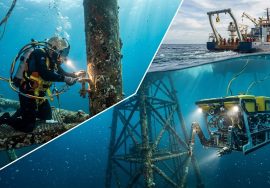
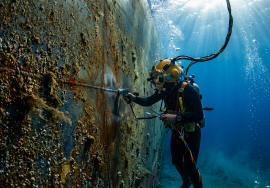
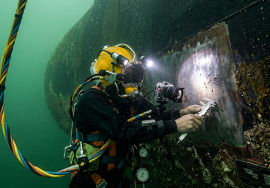
The inspection of underwater infrastructure like pipelines, ship hulls, and offshore structures is a complicated and risky activity. The conventional diving techniques are normally constrained by depth, the strength of currents, and the great danger to human lives. Moreover, the cost of manual inspections is high and limited by the physical capabilities of the diver.
A more technologically advanced ROV inspection service is a modern solution, a new technologically advanced way of doing the inspection of the deep hazardous environment by the use of Remotely Operated Vehicles, to conduct the inspection in real-time and to achieve the accuracy of the inspection. The underwater robots serve as the eyes and hands of the underwater engineers, and they can provide a degree of detail and time that human divers are incapable of doing. ROVs have taken the form of the mainstay of marine asset management in an age where subsea infrastructure is moving into deeper waters.
What are ROV Inspection Services?
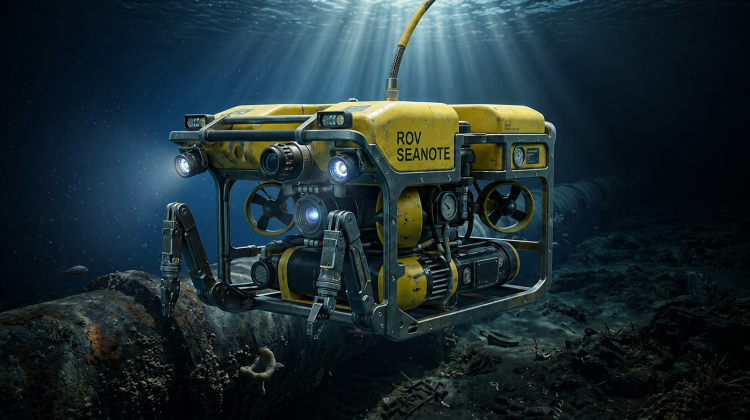
ROV inspection is a type of work whereby highly maneuverable tethered underwater robots are deployed to determine the state of subsea assets. Such cars have high-definition cameras, strong LED lights, and various special sensors and tools.
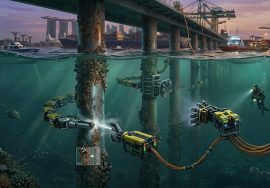
These systems offer a safe data collection platform, as seen in underwater ROV inspection of bridge pylons, to deep-sea remotely operated vehicle inspection of oil and gas wellheads. They are divided according to their size- small (Micro) ROVs to do internal pipe inspections and Work-Class ROVs that can be used in heavy construction and maintenance work in the sea.
How ROV Inspection Works
A symphony of robotics and remote piloting: The operation of an ROV is a symphony of remote piloting and robotics:
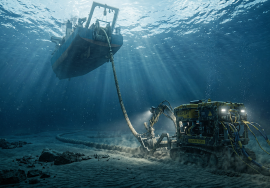
- Deployment: ROV is deployed by means of a Launch and Recovery System (LARS) out of a vessel or offshore platform.
- Remote Control: A pilot on the surface maneuvers the vehicle using an “umbilical” cable, which transmits power and fiber-optic data signals.
- Real-Time Subsea Monitoring: Video and sonar images are sent to the surface in real-time in high definition so that engineers can make instant decisions.
- Sophisticated Sensing: ROVs can be equipped with underwater video inspection devices such as laser profilers to quantify metal loss or 3D photogrammetry to develop digital twins of underwater objects.
Why ROV Inspection is Preferred Over Diver Inspection
Robotics is outcompeting humans in the ROV vs diver inspection battle:
| Feature | Human Divers | ROV Inspection |
| Depth Limit | Limit Shallow (mostly less than 50m without saturation) | Unlimited (to 6,000m+) |
| Safety Risk | High (Decompression, entanglement) | 0 risk to human life. |
| Duration | Oxygen and fatigue limited | Continuous (24/7 operations) |
| Data Quality | Subject (Description by the diver) | Objective (4K video and sensor logs) |
| Cost | High (Vessel + Dive team + Insurance)Expensive (Vessel + Dive team + Insurance) | Economical (Smaller crew, quicker results) |
Applications of ROV Inspection Services
ROV technology is a high-conversion requirement in a number of important subsea industries:
- Subsea Pipeline Inspection: Checking thousands of kilometers of oil and gas pipelines against leaks, spans, or mechanical damage.
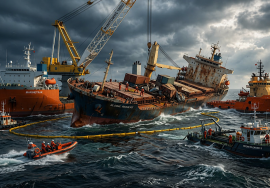
- Ship Hull Inspection ROV: In-Water Surveys (UWILD) to determine the presence of biofouling, plate thickness, and rudder integrity without dry-docking the vessel.
- Offshore Oil & Gas Platforms: Checking fatigue and corrosion of jacket structures, risers, and mooring chains.
- Underwater Infrastructure: Auditing of dams, hydroelectric intakes, and subsea power cables within the renewable energy industry.
- Keywords: marine asset inspection, marine offshore inspection services.
Types of Inspections Performed by ROV
ROV is a sub-sea Swiss-knife. Modern services include:
- Visual Inspection (GVI/CVI): General and Close Visual Inspections with 4K cameras to identify cracks or debris.
- Underwater NDT Services: Robotic arms with Ultrasonic Testing (UT) to measure wall thickness or Alternating Current Field Measurement (ACFM) to measure cracks.
- Corrosion Inspection Underwater: Determining Cathodic Protection (CP) level to verify that the sacrificial anodes continue to protect the structure.
- Debris Clearance: Manipulators are used to clear “ghost nets” or industrial debris off-site and critical subsea valves.
Benefits of ROV Inspection Services
It is apparent that the ROI of contracting an underwater inspection company is:
- Enhanced Safety: No human goes in the water, and there is no chance of decompression sickness or accidental death.
- Low Costs: No more huge dive support vessels and complicated life-support systems.
- Quality Data: Digital records can be re-examined by specialists in any part of the world, which guarantees an increase in audit accuracy.
- Operational Uptime: It is possible to perform inspections when the asset is operational.
Safety and Compliance in Subsea Inspection
Subsea engineering is all about compliance. At industrial inspection services, the following should be followed:
- IMCA Guidelines: Adherence to the International Marine Contractors Association guidelines of ROV operations.
- Class Society Standards: Making sure that inspections are done in line with ABS, DNV, or Lloyd’s Register standards of vessel and offshore integrity.
- Certified Operators: Employing pilots that are trained in both navigation and technical aspects of NDT and subsea engineering.
How to Choose the Right ROV Inspection Provider
When choosing a provider of ROV services, it is important to consider more than the robot.
- Tooling Integration: Can they integrate the NDT sensors of your project?
- Environmental Capability: Are their ROVs able to cope with high currents or low visibility that are common in your location?
- Data Management: Do they offer a cloud-based portal that you can use to view and store your subsea video and inspection reports?
Select professionals when it comes to safe and efficient ROV inspection services.
Cost of ROV Inspection Services
The price of ROV inspection depends on the depth of the project and the Class of the vehicle. A small “Observation Class” ROV to perform a hull check is quite inexpensive; however, a “Work-Class” ROV to undertake deep-water pipeline work needs a larger support vessel.
Pro Tip: Operation safety = higher ROI. ROV services can generally save 30-50% of the cost of large-scale audits by eliminating the insurance premiums and mobilization time of a dive team.
Future Trends in ROV Technology
The underwater environment is going into the age of underwater robotic exploration 2.0:
- Autonomous Underwater Vehicles (AUVs): A type of robot capable of scanning a pipeline without a tether or a pilot, and following a preset route.
- AI-Controlled Navigation: ROVs that employ a pipeline or station-keep with respect to a moving ship hull to control their position by the computer.
- Subsea Resident ROVs: Vehicles that remain underwater in a garage on the ocean floor for months, with a launch every time an inspection is required, but do not involve a surface ship.
Conclusion: Safer Subsea Inspections with ROV
Underwater maintenance is being revolutionized in terms of safety, precision, and efficiency by ROV inspection services. The elimination of human factors in risky depths and the introduction of robotics with high precision allow industries to safeguard their underwater resources more than ever before at relatively low costs. Be it a global shipping fleet or a deep-sea oil field, ROV technology becomes the key to subsea reliability.
Get in touch with us to have a professional ROV inspection.
Frequently Asked Questions (FAQ)
Q1. What is the maximum depth of an ROV?
Ans: Normal observation ROVs are limited to 300m; there are also special-purpose (Work-Class) ROVs with a depth of up to 6,000m or more, far beyond the capabilities of any human diver.
Q2. Is it capable of operating as an ROV in zero visibility?
Ans: Yes. In case of the murky water, ROVs employ imaging sonar (multibeam) to visualize through the silt and generate a digital image of the structure.
Q3. Is ROV superior to a diver in inspecting hulls?
Ans: Yeah, to the majority of visual audits and thickness measurements. It is quicker, safer, and it presents a sustained video report that can be watched by a class surveyor later.
Q4. What would occur in the event of ROV loss of tether?
Ans: The modern ROVs are equipped with a fail-safe system, such as emergency pinger locators, and positive buoyancy, which enables the vehicle to surface to be recovered in case the power goes off.